


Modern systems integrate ECG, gas exchange, SpO₂, blood pressure, and advanced analytical tools into unified platforms with wireless connectivity and intuitive software. This guide highlights the essential features to consider when choosing a CPET system—from all-in-one design and portability to CPET interpretation tools and macOS-based operation—to help healthcare providers make informed purchasing decisions.
1. What Is a CPET System and How Does a CPET Test Work?
The Cardiopulmonary Exercise Testing (CPET) system is used to assess cardiac, pulmonary, and muscular function during exercise. Patients exercise on a treadmill or stationary bike while wearing a facemask that measures oxygen consumption (VO₂) and carbon dioxide production (VCO₂). ECG, SpO₂, and blood pressure are monitored throughout the test and recovery. CPET typically consists of two main parts. The first step is a resting pulmonary function test, which uses a spirometer under supervision to determine baseline respiratory parameters. The second step is an exercise phase, in which cardiopulmonary function is measured as the load gradually increases, while various physiological parameters are continuously monitored.
CPET integrates cardiovascular, respiratory, and metabolic data to assess exercise capacity, identify the causes of exercise intolerance, and guide clinical decision-making.
2. Why CPET Machines Are Essential for Modern Cardiopulmonary Assessment
The information provided by the CPET system cannot be obtained through measurements taken at rest. Continuous monitoring of airflow, oxygen, carbon dioxide, and heart rate during exercise provides clinicians with a clear view of the body’s response to exertion. This information can help differentiate between cardiac and pulmonary causes of exercise limitation, evaluate treatment response, investigate unexplained shortness of breath, and support preoperative risk assessment. Since cardiopulmonary exercise testing (CPET) generates a large amount of physiological data, choosing a system equipped with intuitive software and efficient visualization tools is crucial for accurately interpreting the data and ensuring efficient workflow.
3. Key Features to Look for When Choosing a CPET Machine
3.1 All-in-One System Design for Simplified Workflow
Modern CPET machines integrate ECG, gas exchange, blood oxygen saturation (SpO₂), and blood pressure monitoring functions into a single platform. The advanced system also includes specialized tools such as Wasserman-9 analysis, anaerobic threshold (AT) assessment, respiratory analysis, respiratory divergence, calorimetry, load analysis, and comprehensive report generation.
3.2 Bluetooth Connectivity for Flexible Testing Environments
Bluetooth connectivity allows wireless communication between monitoring devices and the CPET platform, reducing dependence on traditional cable connections.
Wireless operation is ideal for rehabilitation centers, hospital wards, sports facilities, and other portability-sensitive settings.
3.3 Integrated ECG, SpO₂, Blood Pressure, and Gas Exchange Monitoring
A complete CPET system integrates monitoring of ECG, VO₂/VCO₂, SpO₂, and stress blood pressure during exercise testing. Displaying these parameters on a unified software platform allows clinicians to simultaneously evaluate the responses of the cardiovascular, respiratory, and metabolic systems, thereby facilitating more efficient interpretation of CPET results.
3.4 Portable Design for Clinical, Rehabilitation, Sports, and Home Applications
Portability takes CPET beyond traditional labs. Portable systems can be used in hospitals, rehabilitation centers, research facilities, sports performance programs, and even home-based monitoring scenarios.
4. Understanding the Two Main Components of a CPET Test
4.1 Resting Pulmonary Function Testing
Patients undergo pulmonary function testing before exercise to establish baseline respiratory function. These results help interpret CPET results and assist in identifying respiratory limiting factors.
4.2 Cardiopulmonary Exercise Testing with Treadmill or Bicycle Ergometer
During the exercise phase, patients perform a controlled protocol on a treadmill or bicycle ergometer while wearing a facemask for continuous gas exchange analysis. Throughout the test, oxygen consumption, carbon dioxide production, ECG activity, oxygen saturation, and blood pressure are monitored in real time.
The data provides insight into cardiovascular, pulmonary, and metabolic performance during exercise.
5. Advanced Analysis Functions That Improve CPET Interpretation
5.1 Wasserman 9 Analysis
The Wasserman 9-panel display presents multiple physiological variables within a single view, allowing clinicians to evaluate cardiovascular, ventilatory, and metabolic responses during exercise more efficiently.
5.2 Anaerobic Threshold (AT) Assessment
Anaerobic threshold assessment helps identify the point at which exercise intensity begins to exceed the body’s aerobic capacity. This information is commonly used in rehabilitation planning, exercise prescription, and treatment evaluation.
5.3 Intrabreath Analysis
Intrabreath analysis evaluates breath-by-breath physiological changes during exercise, providing additional insight into respiratory performance and ventilatory efficiency.
5.4 Respiratory Divergence Evaluation
Respiratory divergence evaluation helps identify unusual breathing patterns and may contribute to a better understanding of exercise limitations and respiratory abnormalities.
5.5 Calorimetry and Workload Analysis
Calorimetry and workload analysis provide information about energy expenditure, exercise efficiency, and the relationship between physiological effort and external work performed during testing.
6. How an iMac-Based CPET Machine Enhances User Experience
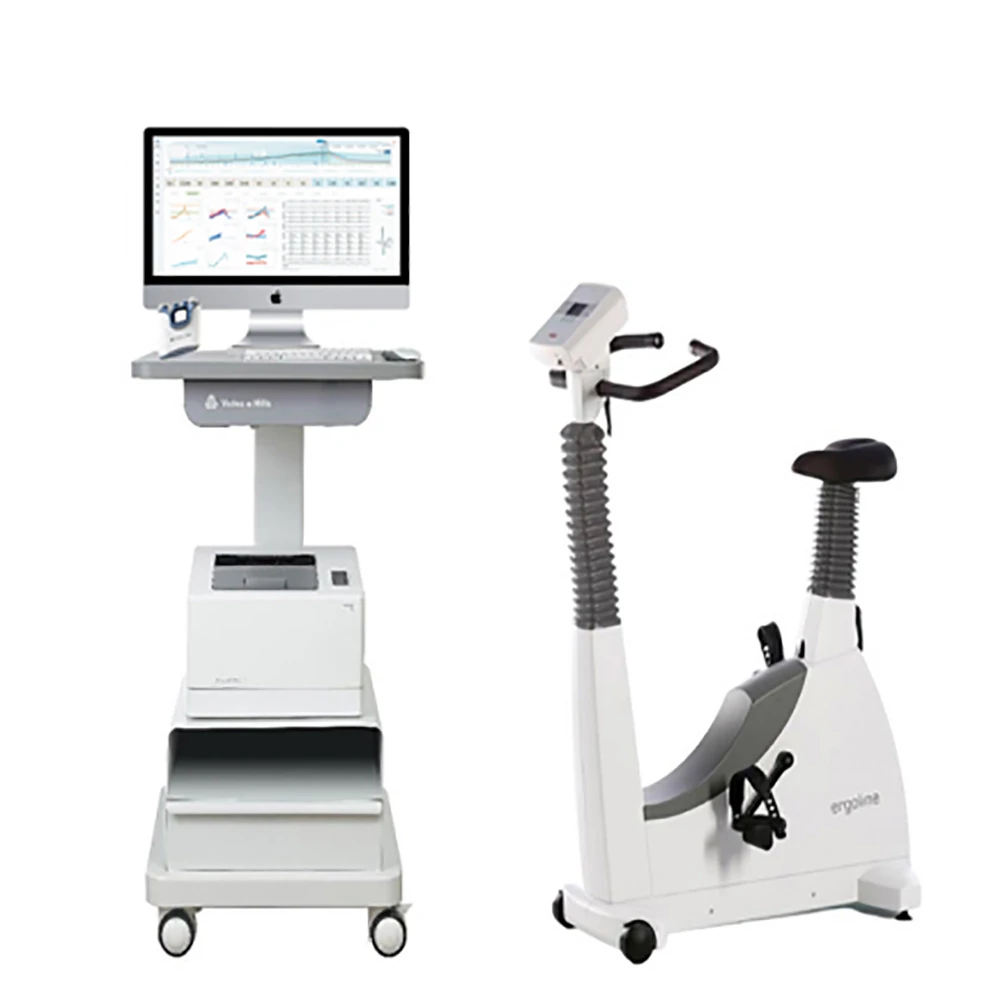
The V&H CPET system is designed to meet all of these requirements while introducing innovations that redefine the user experience. As the first CPET system built on Apple macOS, it combines clinical depth with operational efficiency—making it a compelling choice for healthcare providers seeking a future-ready solution.
6.1 macOS Stability and Performance
By running on Apple macOS, the V&H CPET system leverages the stability, security, and performance of the Apple ecosystem. Medical environments demand reliable system operation to ensure uninterrupted data collection and consistent performance. The V&H system runs on a platform built for long-term stability, allowing clinicians to focus entirely on patient testing and CPET interpretation without concern for system interruptions.
6.2 Intuitive Timeline-Based Data Visualization
The V&H CPET system features timeline-based software that presents data within a unified framework for streamlined visualization. Rather than separating data across multiple disconnected windows, the system uses a singular frame that dynamically integrates past, present, and future data at a glance. This design reduces cognitive load during CPET interpretation, simplifies data review, and supports faster clinical decisions.
7. Applications of CPET
7.1 Hospitals and Cardiology Departments
Hospitals and cardiology departments use CPET systems for exercise capacity assessment, preoperative evaluation, diagnosis of exercise intolerance, and cardiovascular risk assessment.
7.2 Pulmonary Rehabilitation Centers
CPET supports rehabilitation by assisting in the design of exercise programs, monitoring progress, and evaluating the response to treatment.
7.3 Sports Performance Testing
Sports medicine specialists and performance coaches use CPET systems to assess aerobic fitness, optimize training programs, and monitor athletic performance.
7.4 Research Laboratories
Researchers utilize CPET technology to study exercise physiology, evaluate treatment outcomes, and investigate cardiopulmonary function across different populations.
7.5 Home and Remote Monitoring Scenarios
Advances in portability and wireless connectivity have expanded opportunities for remote testing and monitoring, improving accessibility for patients who may have difficulty visiting healthcare facilities.
8. Common Mistakes to Avoid When Buying a CPET Machine
8.1 Focusing Only on Hardware Specifications
Hardware performance is important, but software usability is equally critical. A system with powerful hardware but a complex interface may reduce workflow efficiency and increase training requirements.
8.2 Overlooking Software Analysis Capabilities
Advanced analytical functions such as Wasserman 9-panel visualization, anaerobic threshold assessment, intrabreath analysis, and workload analysis can significantly improve clinical value. Buyers should carefully evaluate software capabilities before making a purchasing decision.
8.3 Ignoring System Portability and Connectivity
Portability and wireless connectivity influence how easily a CPET system can be deployed across different environments. Flexible systems often provide greater long-term value and broader clinical applications.
9. Conclusion
Choosing the right CPET machine requires more than comparing technical specifications. Healthcare providers should evaluate system integration, software usability, connectivity, display quality, analytical capabilities, and portability when selecting a solution.
Modern all-in-one CPET systems that combine ECG, gas exchange analysis, SpO₂ monitoring, blood pressure measurement, Bluetooth connectivity, and advanced interpretation tools can significantly improve workflow efficiency and diagnostic confidence. The V&H CPET system exemplifies these qualities with its macOS-based platform, innovative timeline visualization, and comprehensive analysis tools—offering a new standard for CPET test efficiency and diagnostic accuracy. If you are interested in our product, please feel free to contact us for more information and a quote.
Post time: June 26, 2026


