


Introduction: The Importance of Stress ECG Testing in Modern Cardiac Care
Cardiovascular health evaluation often requires more than a resting heart examination. While a standard resting ECG can record the heart’s electrical activity under normal conditions, some cardiac changes may only appear when the heart is under physical stress.
This is why exercise stress ECG testing has become an important method for evaluating cardiac responses during controlled physical activity. By monitoring ECG signals while a patient exercises on a treadmill or ergometer, healthcare professionals can observe how the heart reacts under increased workload.
For hospitals, cardiology departments, diagnostic centers, and rehabilitation facilities, choosing a reliable stress ECG system is essential. Modern medical institutions are increasingly looking for solutions that not only provide accurate ECG monitoring but also improve workflow efficiency, data management, and user experience.
A 12 Lead Wireless Stress ECG Machine with Mac OS Software combines multi-channel ECG monitoring, wireless connectivity, and advanced software design to support more efficient clinical stress testing procedures.
What Is a Stress ECG Test and How Does It Work?
Understanding Exercise Stress ECG Testing
A stress ECG test, also known as an exercise ECG test, is a cardiac evaluation procedure that monitors the heart’s electrical activity while a patient performs controlled physical exercise.
During the test, the patient typically exercises using equipment such as a treadmill or ergometer. As the exercise intensity increases, the heart rate and workload also increase. The Ecg machine continuously records heart activity and provides doctors with information for evaluation.
Unlike resting ECG examinations, stress ECG testing focuses on observing dynamic changes during different stages of physical activity, including preparation, exercise, and recovery.
A professional stress test ECG system usually includes:
- ECG signal acquisition
- Exercise protocol management
- Real-time monitoring interface
- Data recording and reporting functions
- Patient information management
These functions work together to help healthcare professionals complete stress testing procedures in an organized and efficient way.
Difference Between Resting ECG and Stress ECG
Resting ECG and stress ECG systems serve different clinical purposes.
A resting ECG records heart activity while the patient is at rest. It is commonly used for routine cardiac examinations and provides important information about the heart’s electrical condition at a specific moment.
A stress ECG system, however, evaluates cardiac responses during physical activity. Since exercise increases the heart’s workload, doctors can observe changes that may not be visible during a resting examination.
For this reason, exercise stress ECG testing requires a system that can continuously monitor ECG signals and display important information throughout the entire procedure.
Why Choose a 12 Lead Stress ECG System for Clinical Testing?
Comprehensive ECG Monitoring During Exercise
A 12 lead stress ECG system provides multi-directional ECG monitoring during exercise testing.
The 12 lead configuration allows healthcare professionals to view cardiac electrical activity from multiple perspectives, supporting a more comprehensive evaluation during stress testing.
During exercise procedures, continuous monitoring is important because patient conditions may change as exercise intensity increases. A reliable system should provide clear ECG information throughout different testing stages.
Continuous Monitoring Throughout Different Exercise Stages
Stress testing is not limited to the exercise period itself. A complete procedure usually includes:
- Pretest stage
- Exercise stage
- Recovery stage
Monitoring information across all stages helps doctors review the patient’s response throughout the complete testing process.
Therefore, modern stress ECG solutions require not only ECG recording capabilities but also software that can organize and display information clearly.
How Wireless ECG Technology Improves Stress Testing Efficiency
Reducing Cable Limitations During Clinical Procedures
Traditional medical equipment setups may involve multiple cables connecting patients, ECG devices, and computers. In busy clinical environments, reducing unnecessary cable connections can help create a cleaner and more flexible testing setup.
A wireless stress ECG system uses wireless communication technology to connect ECG devices with the software platform, providing greater flexibility during exercise testing.
This design can help healthcare professionals arrange equipment more conveniently and improve the overall testing experience.
Supporting More Convenient Patient Exercise Testing
During exercise testing, patients need to move naturally while performing activities such as treadmill walking or cycling.
Wireless ECG technology helps reduce physical restrictions caused by cable connections, allowing patients to complete exercise procedures more comfortably.
For medical facilities, wireless connectivity can also make equipment installation and daily operation more convenient.
The Role of Software in Modern Stress ECG Systems
User-Friendly Interfaces Improve Clinical Workflow
In modern medical equipment, software plays an increasingly important role.
A stress ECG system is not only responsible for collecting ECG signals. It also needs to organize information, display important parameters, manage patient records, and support efficient reporting.
A user-friendly interface allows healthcare professionals to quickly understand testing information and reduce unnecessary operation steps during clinical procedures.
For this reason, software design has become an important factor when selecting a stress ECG solution.
Time-Based Data Visualization for Better Test Review
During stress testing, doctors need to understand changes throughout different periods of the examination.
A time-based interface can provide a clearer overview by showing information according to different stages of the testing process.
This type of visualization helps healthcare professionals identify completed stages, current testing status, and upcoming procedures more efficiently.
Key Features to Consider When Choosing a Stress ECG System
ECG Channel Configuration and Signal Monitoring
When selecting a stress ECG system, healthcare providers should first consider ECG channel configuration.
A 12 lead system provides comprehensive ECG monitoring capabilities and is commonly used for professional exercise stress testing applications.
The system should also provide clear data display throughout the entire testing process.
Software Functions and Data Management
Beyond ECG monitoring, software functions are also important considerations.
A professional stress ECG system should support efficient data management features, including:
- Patient information management
- Digital report saving
- Report sharing
- Event marking
- Protocol management
These functions help healthcare facilities organize testing records and improve daily workflow efficiency.
Compatibility with Exercise Equipment
Stress ECG systems often work together with exercise equipment, including treadmills and ergometers.
Before purchasing a system, medical facilities should confirm whether the ECG software can support different exercise equipment configurations.
Flexible compatibility helps healthcare providers build a testing environment that fits their existing clinical requirements.
Applications of Stress ECG Systems in Healthcare Facilities
Hospitals and Cardiology Departments
Hospitals and cardiology departments require professional cardiac testing equipment to support patient evaluation.
A wireless stress ECG system can provide continuous ECG monitoring and organized information display during exercise testing procedures.
With efficient software and data management functions, healthcare professionals can better manage stress testing workflows.
Cardiac Rehabilitation Centers
Cardiac rehabilitation programs often involve controlled physical activity monitoring.
During rehabilitation-related exercise procedures, stress ECG systems can help healthcare professionals observe patient responses and collect relevant testing information.
Medical Diagnostic Clinics
Diagnostic clinics require equipment that combines reliable performance with simple operation.
A user-friendly stress ECG solution with wireless connectivity and digital reporting functions can support efficient daily testing procedures.
Introducing vhStressECG: A Mac OS Based 12 Channel Wireless Stress ECG System
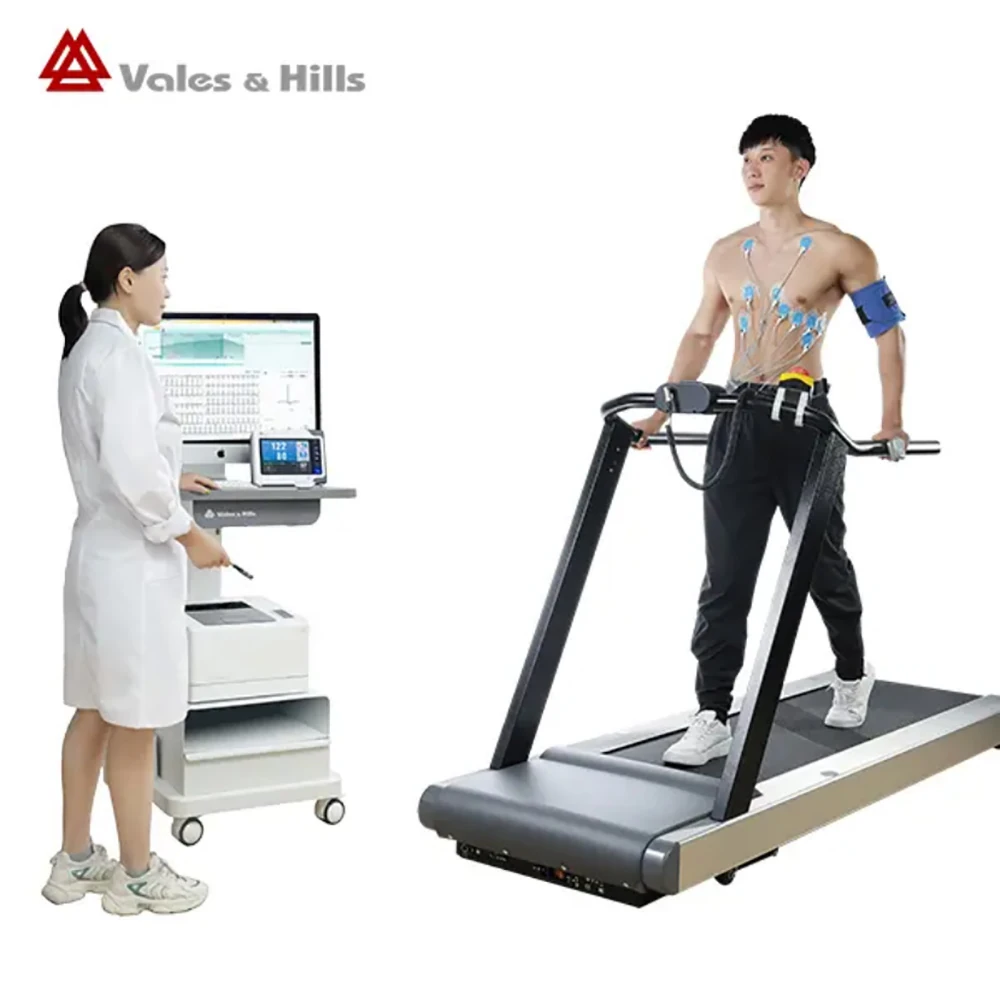
After considering the key requirements of modern stress ECG testing, Vales & Hills Biomedical Tech. Ltd. developed vhStressECG, a professional stress test ECG system based on Mac OS for clinical applications.
The system was designed with a focus on improving software usability and simplifying the stress testing workflow. Compared with traditional Windows-based stress test systems, vhStressECG maintains essential stress testing functions while providing an improved interface and operation experience.
As a 12 channel wireless stress ECG system, vhStressECG combines Mac OS software, Bluetooth ECG connection, and clinical-oriented workflow design to support professional exercise stress testing.
Key Advantages of vhStressECG for Clinical Stress Testing
Mac OS Based Stress Test Software with Simple Operation Logic
vhStressECG features a Mac OS based software platform designed with a clear and user-friendly interface.
The system simplifies operation logic and helps healthcare professionals manage stress testing procedures more efficiently.
Time Axis Overview for Complete Stress Test Tracking
One of the key features of vhStressECG is its time axis overview.
The system provides a complete view of the stress test process from pretest to recovery. Doctors can clearly identify different stages or levels according to the selected stress protocol.
This helps provide a more intuitive understanding of the complete testing procedure.
Integrated Display of ECG and Exercise Parameters
The vhStressECG overview interface displays important information in one place, including:
- ECG
- HR
- BPM
- METs
- ST
- Events
- Slope
- Speed
- Power
By integrating multiple parameters into one interface, the system helps healthcare professionals review testing information more conveniently.
Flexible Protocol and Data Management Functions
vhStressECG includes various built-in protocols and supports customized protocol editing.
The system also provides:
- Automatic event marking
- Digital report saving and sharing
- Patient-based database management
- Automatic A4 printing during testing
These functions help improve testing organization and reporting efficiency.
Wireless Bluetooth ECG Device Design
vhStressECG works with a Bluetooth-connected ECG device designed for flexible clinical use.
The device features a stylish appearance and is available in three color options:
- Health green
- Emergency red
- Minimal grey
The combination of wireless connectivity and modern design provides a practical solution for healthcare environments.
Conclusion: Choosing the Right Wireless Stress ECG Solution for Clinical Applications
As cardiac testing requirements continue to develop, healthcare providers need stress ECG solutions that combine reliable monitoring, efficient software operation, and convenient workflow management.
A wireless 12 lead ecg machine with Mac OS Software provides an effective approach for modern exercise stress testing by integrating multi-channel ECG monitoring, wireless connectivity, and intelligent software features.
For hospitals, clinics, and cardiac testing facilities looking for a professional stress ECG solution, vhStressECG offers a Mac OS based platform with wireless Bluetooth connection, flexible protocol management, and a user-friendly interface designed for clinical applications.
FAQ
Q1: What is a 12 Lead Wireless Stress ECG Machine used for?
A 12 Lead Wireless Stress ECG Machine is used for exercise stress testing to monitor the heart’s electrical activity during physical activity. It helps healthcare professionals evaluate cardiac responses during different testing stages.
Q2: What are the advantages of a wireless stress ECG system?
A wireless stress ECG system reduces cable limitations, provides more flexible equipment setup, and helps create a more convenient testing environment for both healthcare professionals and patients.
Q3: Why choose a Mac OS based stress ECG system?
A Mac OS based stress ECG system provides an intuitive software interface, streamlined operation, and efficient data management features to support smoother clinical stress testing workflows.
Post time: July 24, 2026


