


1. What Is an ECG Simulator
1.1 Definition of ECG Simulator in Medical Testing
An ECG simulator is an electronic device that generates artificial cardiac signals to test, verify, and calibrate ECG monitoring equipment. Instead of using a real patient, medical professionals and biomedical engineers rely on an ECG simulator to check whether an ECG machine is working correctly. The simulator generates known electrical waveforms that mimic the human heart, allowing users to compare the output of an ECG device with expected values.
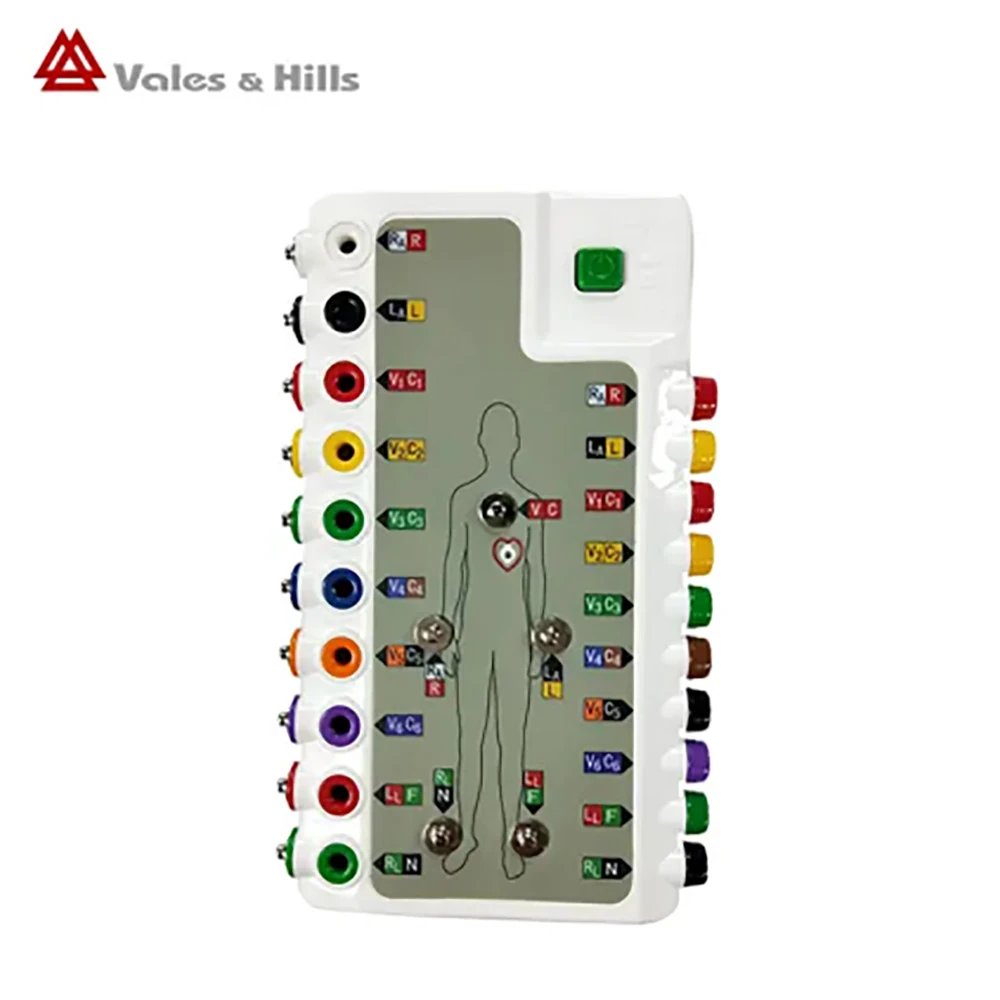
The PS420 is a portable, high-quality ECG simulator from China. This handheld unit works with an Apple iOS application to test various ECG equipment.
1.2 How ECG Signal Simulation Works
The working principle of ECG signal simulation is to generate precise voltages corresponding to different heart conditions. The simulator outputs signals through leads directly connected to the ECG machine, which then displays waveforms as if these signals came from a real patient.
The PS420 offers two working modes. When connected to an iOS app via Bluetooth, it outputs multiple waveform types including Sine Wave, Square Wave, Triangle Wave, Square Pulse, Triangle Pulse, ECG ST Wave, NSR Wave, Pacemaker Wave and Arrhythmia. When used without the app, it directly outputs a default 80 BPM ECG signal.
2. Why ECG Simulators Are Important for Medical Equipment Testing
2.1 Ensuring Accuracy of ECG Monitoring Devices
Even tiny errors in ECG readings can lead to misdiagnosis of arrhythmias, myocardial ischemia, or heart attacks. The ECG simulator provides a known and stable reference standard for verifying waveform shape, amplitude, and timing. Regular ECG simulator testing can prevent calibration drift from affecting patient care.
2.2 Reducing Risks in Clinical Environments
Using a real patient to test ECG machines is neither practical nor safe. Patients should never be used as test subjects for equipment adjustment. This simulator completely eliminates this risk, enabling continuous testing, repeated calibration, and troubleshooting without involving any biological hazards. The PS420 can also produce abnormal waveforms like Arrhythmia and Pacemaker Wave that would be difficult or dangerous to obtain from a real patient on demand.
2.3 Supporting Biomedical Engineering and R&D
Biomedical engineers need repeatable, standardized signals for designing or improving ECG systems. In R&D settings, engineers can test how an ECG machine responds to rare arrhythmias or pacemaker spikes. The PS420 meets this requirement with its wide range of waveforms and its ability to output analog signals to multiple ECG equipments simultaneously.
3. How an ECG Simulator Works
3.1 Signal Generation (Sine, Square, ECG Waveforms)
Basic waveforms like Sine Wave, Square Wave, and Triangle Wave are used for checking frequency response and linearity of ECG machines. More complex waveforms like ECG ST Wave, NSR Wave, Pacemaker Wave and Arrhythmia are used for clinical performance testing. The PS420 generates these signals under the control of an iOS application, which sends instructions via Bluetooth.
3.2 Multi-Lead Output for Different ECG Machines
Different ECG machines use different lead systems—10-lead banana, 10-lead snap, or 5-lead snap. A good ECG simulator must support all these configurations. The PS420 is designed to work with all three types, making it versatile for hospitals that have multiple ECG machine brands and models.
3.3 Dual Working Modes (App-Controlled vs Standalone)
When connected to the iOS app via Bluetooth, the PS420 gives the user full control over waveform selection, rate, amplitude, and noise settings. This mode is used for comprehensive testing, teaching, and research. When used without the app, it directly outputs a default ECG signal with a heart rate of 80 BPM. This standalone operating mode is ideal for quick function checks—simply power on the PS420 and connect it to an ECG machine to immediately confirm that the machine is displaying a normal sinus rhythm of 80 BPM.
4. Key Features of a Portable ECG Simulator
4.1 Wireless Bluetooth Integration
The PS420 connects via Bluetooth to the iOS app for fast, stable, uninterrupted signal transmission. Unlike traditional wired emulators, Bluetooth technology supports remote control—you can operate the PS420 from the other side of the room while it remains connected to the ECG machine.
4.2 Multi-Device Connection Capability
A key feature of the PS420 is its ability to test multiple ECG machines at once. The PS420 can connect to 2 ECG equipments with 10-lead banana cable, 1 ECG equipment with 10-lead snap cable, and 1 ECG equipment with 5-lead snap cable at the same time. In the biomedical engineering department of a hospital, this means that a technician can use the same signal source to calibrate four different ECG machines at the same time, thus saving a significant amount of time during preventative maintenance inspections.
4.3 Pre-Set ECG Waveforms and Arrhythmia Simulation
With the iOS application, the PS420 outputs Sine Wave, Square Wave, Triangle Wave, Square Pulse, Triangle Pulse, ECG ST Wave, NSR Wave, Pacemaker Wave and Arrhythmia. Among these, ECG ST Wave, NSR Wave, Pacemaker Wave and Arrhythmia can be further customized with noise and baseline noise to simulate real ECG wave. This allows users to test how an ECG machine responds to noisy signals or baseline drift, which is common in real clinical settings.
4.4 Handheld and Battery-Powered Design
The portable, lightweight PS420 is powered by 2 pieces of AA batteries and can be used anywhere without a power outlet. Many hospital testing areas do not have conveniently located AC outlets, and field service engineers often need to test equipment in patient rooms, ambulances, or remote clinics. AA batteries are universally available, making this simulator truly portable and always ready for use.
5. Applications of ECG Simulators
5.1 Hospital Equipment Testing
The biomedical engineering department uses simulators such as the PS420 to perform preventative maintenance, repair verification, and calibration recording of ECG monitors, telemetry devices, and exercise stress testing systems. Given the large number of ECG testing devices distributed throughout the hospital, using a portable simulator like the PS420 allows for on-site testing without having to move the devices to a central repair room.
5.2 Biomedical Research Laboratories
Researchers need repeatable waveforms. The PS420 can output standard signals (sine waves, square waves) for frequency response analysis and clinical waveforms (arrhythmia waveforms) for algorithm verification. Its noise and baseline noise customization is valuable for developing noise-tolerant ECG algorithms that perform well in real-world conditions.
5.3 Medical Device Manufacturing and Quality Control
Manufacturers of ECG machines must test every unit before it leaves the factory. An ECG simulator is used on the production line to verify that each device meets specifications. The PS420 can test multiple units simultaneously, which improves throughput in quality control. This is especially valuable for high-volume manufacturers who need to balance speed with thorough testing.
5.4 Medical Training and Education
Medical and nursing students need to learn how to interpret ECG rhythms. Instead of relying solely on static printed strips or computer simulations, instructors can use the PS420 connected to a real monitor to output NSR Wave, Arrhythmia, Pacemaker Wave, and ECG ST Wave in sequence. This creates dynamic teaching sessions where students see how rhythms appear on actual clinical equipment they will use in their careers.
6. Choosing the Right ECG Simulator for Your Needs
6.1 Portability and Power Options
For testing ECG machines in multiple locations, choose a handheld, battery-powered device like the PS420. It runs on 2 AA batteries—ideal for field service, multiple hospital wards, or outdoor training. Battery power means no delays searching for a wall outlet.
6.2 Compatibility with ECG Machines
Before purchasing the simulator, please verify the type of lead wires used by your ECG machine. The PS420 supports 10-lead banana, 10-lead snap, and 5-lead snap cables, covering the vast majority of clinical ECG monitors.
6.3 Easy Setup with Free iOS App
The ECG simulator software is developed by Vales & Hills Biomedical Tech. Ltd. for iOS. Search “ECG Simulator” on the Apple App Store to install it free of charge. No additional software purchase is required, and the app can be updated easily. The Bluetooth connection between the PS420 device and the iOS app ensures fast, stable, and uninterrupted signal transmission.
7. Conclusion
ECG simulators are essential tools for accurate, safe, and reliable ECG monitoring. The PS420 is a portable, high-quality simulator for hospitals, labs, manufacturers, and educators.
Key advantages: dual working modes (app or standalone 80 BPM), Bluetooth, wide waveform range with noise simulation, simultaneous connection to 4 ECG machines, handheld AA battery design, and a free iOS app.
Whether you’re an engineer, researcher, or educator, the PS420 protects patient safety and maintains the highest cardiac monitoring standards.
Post time: June 18, 2026


