


The past decade has seen significant advances in ECG technology. Healthcare providers today face a key ECG decision: Android wireless or PC-based wired? Each has its strengths, and the right choice depends on your clinical setting, workflow, and mobility needs.
This article compares two ECG system architectures—Android-based wireless solutions like the iCV200, and PC-based ECG like the CV200. Both are manufactured by Vales & Hills and share the same CE-certified quality standards, yet they serve distinctly different clinical needs. By examining their specifications, features, and ideal use cases, medical professionals can determine which platform better aligns with their practice environment and workflow requirements.
What Is an Android-Based ECG System
An Android-based ECG system consists of a portable ECG acquisition device that transmits data wirelessly to an Android tablet or smartphone. The system replaces traditional desktop computers with mobile devices running specialized software. In the case of the iCV200, the aECG software installed on Android devices handles waveform display, analysis, storage, and transmission. Data transmission between devices operates via Bluetooth, eliminating the need for cumbersome data cables.
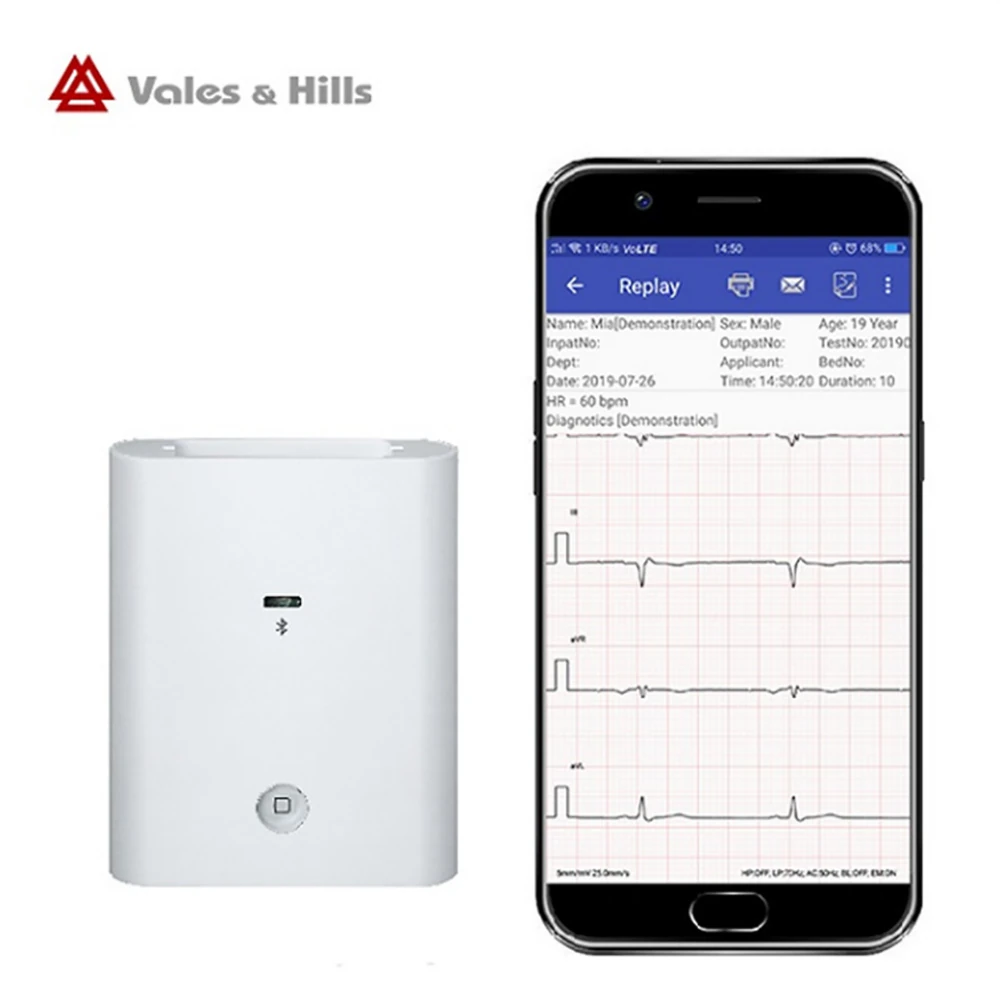
Key Features of the Android ECG iCV200
| Feature | Specification |
| Model | iCV200 |
| Lead Configuration | Simultaneous 12-channel |
| Transmission Method | Bluetooth |
| Operating System | Android-based |
| Software | aECG |
| Power Supply | 2 × AA batteries |
| Certification | CE |
Simultaneous 12-Lead Recording – Captures all 12 leads at once for accurate, comprehensive cardiac data in a single acquisition.
Bluetooth Wireless Transmission – A stable Bluetooth connection enables wireless operation, reduces cable clutter, and allows for flexible patient positioning during the examination.
Portable Handheld Design – This compact ECG device fits into a carrying case, making it ideal for mobile medical professionals who need to travel between hospital wards, clinics, or patients’ homes.
Android-Based aECG Software – The software offers rapid ECG acquisition, automatic analysis and measurement, email transmission, and printing capabilities, with all operations performed via an intuitive mobile interface.
CE Certified – The device meets European medical device safety and performance standards.
Additional Features – Patient data protection security, network service support (optional), and smart, portable design.
What Is a PC-Based ECG System
A PC-based ECG system consists of an ECG acquisition box connected to a desktop or laptop computer via a USB data cable. The system relies on Windows-based software—such as CardioView installed on the CV200—for waveform analysis, diagnosis, and data management. Printer integration allows for physical report generation, making it a complete workstation solution.
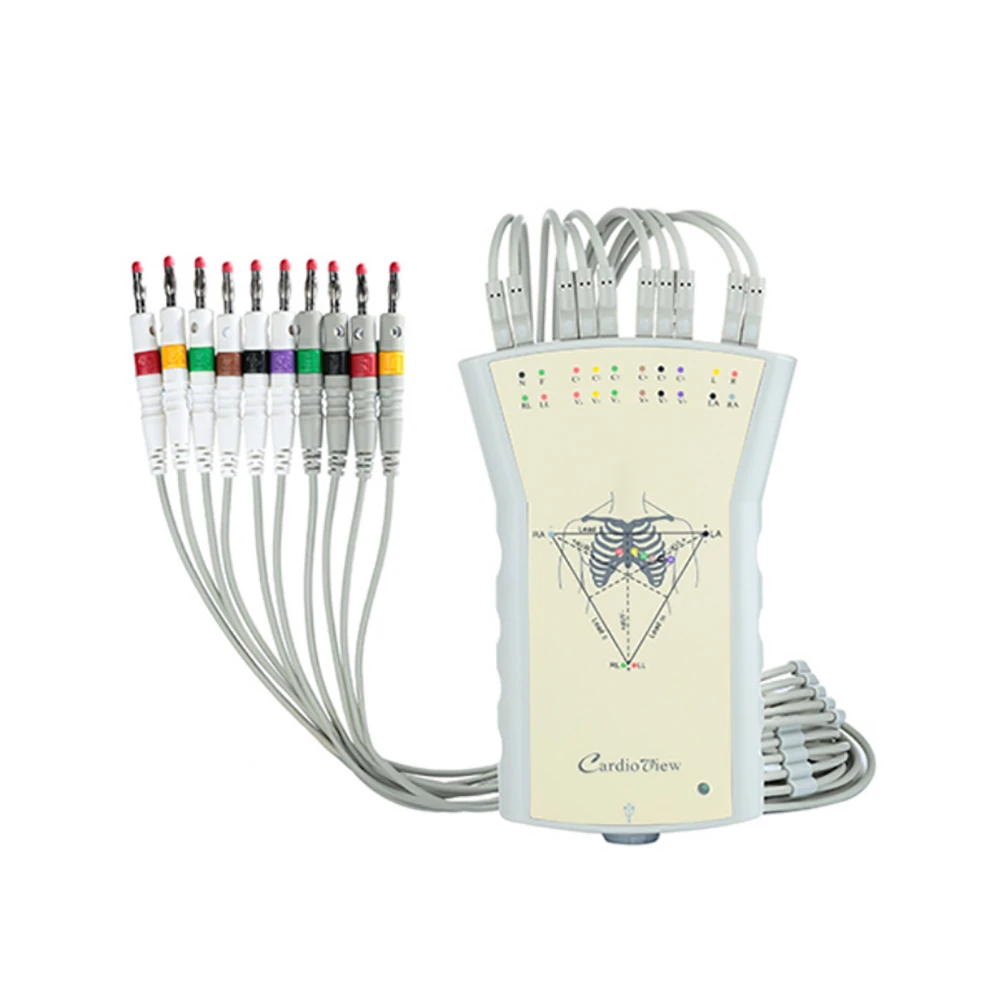
Key Features of the PC ECG CV200
| Feature | Specification |
| Model | CV200 |
| Connection Method | USB cable to Windows PC |
| Software | CardioView |
| Power Supply | Battery-free (USB-powered) |
| Analysis Capabilities | ECG, VCG (Vectorcardiogram), VLP (Late Potential) |
| Defibrillation Protection | Built-in |
| Certification | CE |
12-Channel PC-Based ECG – The CV200 provides simultaneous 12-lead acquisition with powerful diagnostic and analysis functions for detecting conditions such as arrhythmia and angina.
USB Connection to Windows PC – USB connection ensures stable, interference-free data transmission for real-time analysis and storage.
Automatic Diagnosis Feature – CardioView software provides automated analysis and key measurements to facilitate rapid patient triage.
Battery-Free Operation – Powered directly via USB from the connected computer, eliminating the need for battery replacements and ensuring readiness to handle emergencies at any time.
Built-In Defibrillation Protection – Built-in defibrillation protection ensures accurate readings even when used simultaneously with a defibrillator, electrosurgical unit, or other equipment that generates electromagnetic interference (EMI).
VCG and VLP Analysis –In addition to standard electrocardiography (ECG), the CV200 supports VCG and VLP analysis for advanced cardiological diagnosis.
Android ECG vs PC-Based ECG: Key Differences
1. Portability
The iCV200 Android ECG machine is designed for mobility—the ECG box fits in a pouch, and the entire system (tablet + ECG box + electrodes) can be carried in a small bag. The PC-based CV200 system requires a desktop or laptop computer, an ECG acquisition unit, a data cable, and a printer; consequently, it is suitable for fixed diagnostic sites but not for mobile use.
2. Connectivity Method
The iCV200 uses Bluetooth wireless transmission, eliminating cables and enabling patient examination at bedside or remote locations. The CV200 uses a wired USB connection for stable, uninterrupted data transmission—especially critical in environments with RF interference.
3. Power Supply
The iCV200 is powered by two AA batteries and does not require a power outlet. The CV200 is powered by USB and can work continuously as long as the computer is running.
4. Installation and Setup
Android ECG systems require simple app installation (aECG software) on an existing Android device. USB connectivity gives the CV200 stable, interference-free transmission—critical in RF-dense clinical environments.
5. Data Management
The Android system offers app-based data storage with emailing and printing functions directly from the tablet. The PC system integrates seamlessly with hospital networks, servers, and medical databases for institutional data management.
6. Anti-Interference Capability
The CV200’s built-in defibrillation protection makes it ideal for ORs, ICUs, and other EMI-sensitive settings. The iCV200 is intended for use in environments with limited radio frequency harassment.
Which ECG System Is Better for Different Medical Scenarios
Hospitals and Large Medical Centers
The CV200 is preferred for its wired stability, system integration, printer support, and defibrillation protection for ORs and ICUs.
Small Clinics and Private Practices
The iCV200 is ideal for practices that value mobility and simplicity over full IT integration, with fast deployment and lower equipment costs.
Emergency and Ambulance Use
Android iCV200 is the clear choice. Its battery-powered operation, Bluetooth transmission, and compact design enable ECG collection during transport, at accident scenes, or in patients’ homes.
Telemedicine and Remote Healthcare
Android iCV200 portable Ecg device excels here with its wireless connectivity, emailing functions, and optional network service support—enabling remote diagnosis and specialist consultation without physical transfer of equipment.
Operating Rooms and ICUs
PC-Based CV200 with built-in defibrillation protection ensures safe operation alongside defibrillators and electric knives, preventing interference and maintaining reading accuracy.
Vales Hills Offers Both Android and PC ECG Solutions
As a CE-certified manufacturer, Vales & Hills provides comprehensive ECG solutions across both platforms:
Android ECG iCV200
Simultaneous 12-channel Bluetooth ECG
aECG software for Android devices
2 × AA battery powered
Portable pouch design
PC-Based ECG CV200
12-channel USB ECG for Windows
CardioView software with ECG, VCG, VLP analysis
Built-in defibrillation protection
Battery-free, stable wired connection
Both models support OEM/ODM customization, allowing medical distributors and healthcare organizations to brand and configure devices according to specific market requirements. Whether you serve hospitals, clinics, emergency services, or telemedicine platforms, our product portfolio covers every scenario.
FAQ
1. Can I use the Android ECG iCV200 without a tablet or smartphone?
No. The iCV200 wireless ECG machine requires an Android tablet or smartphone with the aECG app installed for waveform display, analysis, and Bluetooth data transmission. It cannot be used alone.
2. What are the advantages of a PC-based ECG system over a wireless ECG device?
With features such as stable USB connectivity, hospital network integration capabilities, VCG/VLP analysis functions, and defibrillation protection, the CV200 is an ideal choice for hospitals, ICUs, and operating rooms where EMI control and data integration are critical.
3. Which is better for remote clinics, Android or PC-based ECG?
For remote clinics and mobile healthcare, the Android iCV200 is the better choice—Bluetooth, battery-powered, portable, with email/print functions for rapid ECG collection anywhere. The PC-based CV200 suits fixed diagnostic centers with existing IT infrastructure.
Conclusion
There is no universal “better” system—the choice depends entirely on your clinical context.
Choose the Android iCV200 if:
You need portable, wireless ECG collection
Your practice involves home visits, ambulances, or remote clinics
You want rapid deployment with minimal equipment
You prefer battery-powered operation
Choose the PC-Based CV200 if:
You operate a fixed diagnostic workstation in a hospital or large clinic
You require VCG and VLP analysis beyond standard ECG
Your environment includes defibrillators or electric knives
You need seamless integration with hospital IT systems
Vales & Hills supports both pathways with CE-certified, technically robust devices. Contact us to discuss which solution fits your medical practice—or explore how our dual-product line can serve all your ECG needs under one reliable partnership.
Post time: July 3, 2026


