


What Is a Holter ECG?
A Holter ECG is a portable ambulatory ECG device that continuously records the heart’s electrical activity, usually for 24 hours or longer. Unlike a standard ECG that captures only a short snapshot of heart rhythm, a Holter ECG monitors cardiac activity during daily activities, helping detect intermittent arrhythmias and other abnormalities that may be missed.
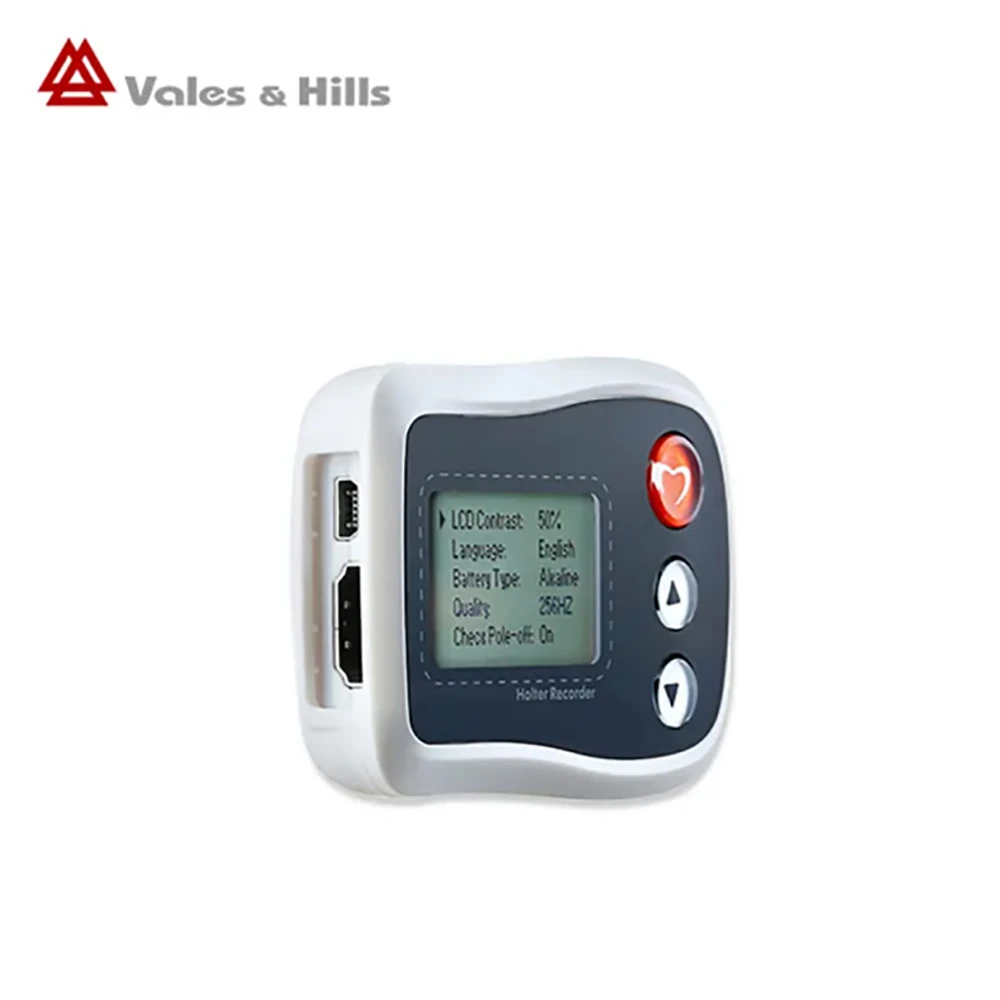
Our CV3000 Holter ECG device is designed for patients requiring ambulatory monitoring, supporting applications such as arrhythmia evaluation, ST-segment analysis, pacemaker monitoring, heart rate variability (HRV) reporting, and QT interval assessment.
How Does a Holter ECG Work?
A Holter ECG works by using electrodes attached to the patient’s chest to collect electrical signals generated by each heartbeat. These signals are transmitted to a compact recorder, which stores ECG data continuously throughout the monitoring period.
The monitoring process typically includes several steps:
Electrode Placement and Signal Recording
Healthcare professionals place electrodes on specific areas of the patient’s chest. The CV3000 supports 3-channel, 12-lead ECG recording and is compatible with 5-pin, 7-pin, and 10-pin cables, allowing flexible use in different clinical environments.
Full-Disclosure Data Storage
During monitoring, the device continuously records ECG signals and stores full-disclosure data. This means the complete ECG recording is available for review, helping clinicians identify abnormal events that may occur during daily activities, sleep, exercise, or periods of stress.
Data Transfer and ECG Analysis
After monitoring is completed, ECG data can be downloaded through a USB data cable or multi-card reader/SD card interface for further analysis. The recorded information can then be reviewed through specialized software to support clinical diagnosis.
The CV3000 digital ECG machine provides a maximum sample rate of 1024/Sec and 8–16 bit resolution, helping capture detailed ECG signals with high accuracy for reliable analysis.
How Is a Holter ECG Different from a Standard ECG?
The main difference between a Holter ECG and a standard ECG is the monitoring duration.
A standard ECG records the heart’s electrical activity for only a few seconds while the patient is resting in a medical facility. Although it is useful for detecting immediate cardiac abnormalities, it may not capture irregular events that occur occasionally.
A Holter ECG provides continuous monitoring for 24 hours or more, allowing clinicians to evaluate the heart during real-life situations, including:
- Daily activities
- Sleep
- Physical exercise
- Work and stress conditions
- Symptom episodes
This extended recording period increases the possibility of identifying intermittent arrhythmias and other temporary cardiac changes. It also allows doctors to compare patient symptoms, such as palpitations or dizziness, with actual ECG events. For this reason, ambulatory ECG monitoring provides valuable information for patients whose symptoms are difficult to diagnose with a traditional resting ECG.
When Is a 24-Hour Holter ECG Recommended?
Detecting Arrhythmias
One of the most common applications of a 24-hour Holter ECG is arrhythmia detection.
Heart rhythm abnormalities may appear only occasionally, making them difficult to capture during a short ECG test. Holter monitoring helps clinicians evaluate patients experiencing symptoms such as:
- Palpitations
- Dizziness
- Fainting (syncope)
- Unexplained chest discomfort
The CV3000 records every heartbeat during the monitoring period, helping doctors analyze the type, frequency, and timing of arrhythmias and their relationship to patient activities.
Evaluating Myocardial Ischemia and ST-Segment Changes
Holter ECG monitoring can also be used to evaluate ST-segment changes associated with myocardial ischemia.
Some ischemic events may occur during physical activity or emotional stress rather than during a clinical examination. Continuous ECG recording allows healthcare providers to identify these temporary changes throughout the day and night.
The CV3000 supports ST-segment evaluation, making it suitable for patients requiring assessment of possible ischemic events and treatment effectiveness.
Monitoring Patients with Pacemakers
Patients with pacemakers require regular evaluation to ensure proper device performance and cardiac response.
A Holter ECG can record both the patient’s natural cardiac activity and pacemaker-related signals, helping clinicians assess pacing performance and detect possible rhythm abnormalities.
The CV3000 provides comprehensive monitoring functions for patients with pacemakers, supporting professional cardiac assessment in hospitals and clinics.
Assessing Heart Rate Variability and QT Interval
Advanced Holter ECG analysis can provide additional clinical information beyond basic rhythm monitoring.
The CV3000 portable ECG machine supports time-domain and frequency-domain heart rate variability (HRV) reporting, helping healthcare professionals evaluate variations between heartbeats and support cardiovascular risk assessment.
The device also provides QT interval reporting, allowing clinicians to monitor changes related to electrical recovery time between heartbeats and identify potential risks associated with prolonged QT intervals.
Benefits of 24-Hour Holter ECG Monitoring
Continuous Cardiac Monitoring During Daily Activities
The main advantage of a 24-hour Holter ECG is that it provides continuous cardiac monitoring while patients maintain their normal routines. Unlike a resting ECG performed in a controlled clinical environment, Holter monitoring captures real-world heart activity during sleep, exercise, work, and other daily situations.
This long-term recording provides clinicians with a more complete understanding of cardiac performance and helps support accurate diagnosis, treatment evaluation, and follow-up monitoring.
Capturing Intermittent Heart Rhythm Abnormalities
Many cardiac conditions occur unpredictably and may not be detected during a short ECG examination. A 24-hour Holter ECG increases the chance of identifying temporary rhythm abnormalities by continuously recording thousands of heartbeats throughout the monitoring period.
With full-disclosure recording, the CV3000 Holter ECG device allows healthcare professionals to review complete ECG information and identify abnormal patterns that may otherwise be missed.
Improving Diagnostic Accuracy
Accurate diagnosis requires detailed and reliable ECG data. Advanced Holter ECG devices combine high-quality recording technology with automated analysis functions to improve clinical efficiency.
The CV3000 provides high-precision automatic analysis and diagnosis, helping clinicians quickly review ECG results and identify important findings. Its advanced analysis functions support both general doctors who need comprehensive clinical information and professional cardiologists who require accurate results for decision-making.
Supporting Long-Term Cardiac Assessment
For patients with existing cardiac conditions or those undergoing treatment, Holter ECG monitoring provides valuable information about disease progression and treatment effectiveness.
By comparing ECG data before and after therapeutic interventions, healthcare providers can better evaluate patient responses and make informed clinical decisions.
What Features Should You Look for in a Holter ECG Device?
Recording Channels and Lead Configurations
The recording channels and lead configuration directly affect the amount of ECG information that can be collected.
The CV3000 Holter ECG device supports 3-channel, 12-lead recording, providing detailed cardiac information for clinical evaluation. It supports multiple cable options, including 5-pin cable, 7-pin cable, and 10-pin cable, allowing flexibility for different patient monitoring requirements.
Sampling Rate and Data Accuracy
A high sampling rate and accurate signal resolution are important factors when selecting a Holter ECG device.
The CV3000 features a maximum sample rate of 1024/Sec with 8–16 bits resolution, helping capture detailed ECG signals and supporting accurate automatic analysis.
These specifications make the device suitable for applications that require reliable rhythm analysis, including arrhythmia detection, ST-segment evaluation, and advanced ECG reporting.
USB and SD Card Data Transfer
Efficient data management is essential for hospitals, clinics, and diagnostic centers.
The CV3000 supports flexible data transfer through USB cable and SD card/multi-card reader, allowing healthcare professionals to quickly download patient recordings for analysis.
This convenient workflow helps reduce processing time and improves operational efficiency in busy clinical environments.
Automatic ECG Analysis and Reporting
Modern Holter ECG systems require more than basic recording capabilities. Advanced analysis functions help clinicians obtain faster and more detailed diagnostic information.
The CV3000 provides high-precision automatic analysis and diagnosis with additional clinical functions, including:
- Heart Rate Turbulence (HRT) analysis
- VE Chaos analysis
- Heart Rate Variability (HRV) analysis
- QT interval reporting
These functions provide detailed ECG results for clinical and epidemiological applications. For general practitioners, additional analysis functions provide valuable diagnostic support. For specialist doctors, accurate and fast ECG results improve workflow efficiency.
Comfortable Design for Long-Term Wear
Patient comfort is an important factor during ambulatory monitoring. A lightweight and reliable recorder helps patients complete the monitoring process without significantly affecting daily activities.
The CV3000 is designed as a smart and mini-recorder, featuring high-quality recorders, cables, accessories, and professional product support to ensure stable performance during long-term monitoring.
Why the CV3000 Holter ECG Is a Reliable Choice for Hospitals and Clinics?
The CV3000 Holter ECG device combines accurate recording, advanced analysis functions, and flexible data management to meet the needs of professional cardiac monitoring.
Key advantages include:
- 24-hour full-disclosure recording to capture complete ECG data
- High-precision automatic analysis and diagnosis
- Support for HRV, HRT, VE Chaos, and QT interval analysis
- USB and SD card data transfer options
- 3-channel, 12-lead ECG recording capability
- FDA (Elite Plus), CE, and ISO13485 certifications
The small Ecg device is suitable for evaluating arrhythmias, myocardial ischemia, pacemaker patients, heart rate variability, and QT interval changes.
With its compact design, reliable recording performance, and comprehensive analysis functions, the CV3000 provides hospitals, clinics, and healthcare professionals with an effective solution for ambulatory ECG monitoring.
Frequently Asked Questions About Holter ECG
What can a Holter ECG detect?
A Holter ECG can detect irregular heart rhythms, ST-segment changes, pacemaker-related issues, heart rate variability changes, and QT interval abnormalities. It can also help connect symptoms such as palpitations, dizziness, or fainting with actual cardiac events.
How long should a Holter ECG be worn?
A Holter ECG is typically worn for 24 hours. The CV3000 provides reliable full-disclosure recording throughout the monitoring period to ensure complete ECG data collection.
Can patients sleep or exercise while wearing a Holter ECG?
Yes. Patients can usually continue normal daily activities, including sleeping and moderate exercise, while wearing a Holter ECG. This allows doctors to evaluate real-world cardiac performance.
Is a Holter ECG more accurate than a standard ECG?
For detecting intermittent cardiac conditions, a Holter ECG can provide more diagnostic information because it continuously records heart activity over a longer period compared with a short resting ECG.
Who should use a 24-hour Holter ECG?
A 24-hour Holter ECG is commonly used for patients with unexplained palpitations, dizziness, fainting, chest discomfort, suspected arrhythmias, pacemakers, or those requiring evaluation of treatment effects and heart rate variability.
Post time: July 17, 2026


