


What Is a Cardiopulmonary Exercise Test (CPET)?
Cardiopulmonary Exercise Testing (CPET) is performed to observe how the body reacts when exercise intensity increases. CPET looks beyond resting measurements by tracking how the body changes throughout exercise, including breathing patterns, gas exchange, and cardiovascular responses.
During the exercise session, CPET combines multiple measurement functions to record changes in respiratory and cardiovascular performance. The results help show how the heart and respiratory system respond to physical workload. Due to its ability to assess exercise performance under controlled conditions, CPET is commonly used in hospitals, rehabilitation programs, research laboratories, and sports medicine applications.
How Does a CPET Machine Work?
A CPET MACHINE works by integrating multiple monitoring technologies to collect and analyze patient data throughout the exercise process.
The exercise stage is usually performed on a treadmill or bicycle ergometer. With a face mask linked to the gas analysis system, the patient’s breathing and cardiovascular responses can be observed as the workload increases.
The CPET process typically involves the following stages:
- Resting Pulmonary Function Assessment Before Exercise
- Controlled exercise testing
- Continuous physiological monitoring
- Recovery observation after exercise
The results from CPET show how physiological responses change as the body moves through different stages of exercise.
Key Measurements During CPET Testing
A CPET system evaluates multiple parameters during exercise, including:
- Oxygen consumption (VO₂)
- Carbon Dioxide Production and Gas Exchange Analysis
- Respiratory Exchange Ratio (RER)
- Exercise workload
- Heart rate response
- Oxygen saturation changes
The collected data shows how the cardiovascular and respiratory systems respond to exercise and changing workloads.
VO₂, VCO₂ and Respiratory Exchange Ratio (RER) Analysis
Gas exchange analysis is one of the most important parts of CPET.
In CPET testing, VO₂ and VCO₂ are reviewed together to observe changes in gas exchange during exercise. Changes in these values during higher workloads show how the body adjusts its energy use during exercise.
RER (Respiratory Exchange Ratio) is calculated from VO₂ and VCO₂ values during exercise and is used to review changes in gas exchange. As the test continues, variations in RER help show how energy metabolism changes under different exercise loads.
ECG, SpO₂ and Blood Pressure Monitoring During Exercise Testing
Because exercise affects both cardiovascular and respiratory systems, CPET often combines different monitoring functions.
ECG monitoring helps observe heart activity during exercise. SpO₂ measurement tracks oxygen saturation, while stress blood pressure monitoring provides additional information about cardiovascular response under workload conditions.
The combination of these measurements allows a more complete evaluation compared with isolated resting examinations.
CPET Procedure: From Pulmonary Function Testing to Exercise Analysis
Resting Pulmonary Function Test Before CPET
Before exercise begins, patients may complete a pulmonary assessment to evaluate baseline respiratory function.
A SPIROMETRY TEST is commonly used to measure lung function through supervised breathing maneuvers. It provides important respiratory parameters that help establish a reference before exercise testing.
Common measurements include:
- FVC (Forced Vital Capacity)
- SVC (Slow Vital Capacity)
- MVV (Maximum Voluntary Ventilation)
These values provide information about respiratory capacity before the exercise phase starts.
Exercise Testing on Treadmill or Cycle Ergometer
After the initial assessment, the patient performs exercise using a treadmill or bicycle ergometer.
During this stage, the CPET system continuously monitors:
- Respiratory gas exchange
- Heart response
- Oxygen saturation
- Exercise workload
- Blood pressure changes
The exercise protocol can be adjusted according to testing requirements, allowing healthcare professionals to observe physiological changes under controlled conditions.
Gas Exchange Analysis and Recovery Monitoring
Gas exchange analysis continues throughout exercise and recovery.
Through respiratory measurements, professionals can evaluate changes in oxygen consumption and carbon dioxide production as exercise intensity increases.
Recovery monitoring after exercise is also an important part of the process, helping provide additional information about the patient’s physiological response.
Key Components of a Cardiopulmonary Exercise Testing System
Metabolic Cart and Gas Analyzer
A Metabolic Cart / Gas Analyzer is a key component of CPET equipment.
It analyzes respiratory gases collected during exercise and provides information related to oxygen consumption and carbon dioxide production. This data forms an important foundation for evaluating exercise response.
Accurate gas exchange measurement allows healthcare professionals to review detailed physiological changes throughout the testing process.
Spirometry Test and Respiratory Parameters
Respiratory measurement is essential for understanding lung performance during exercise.
By combining spirometry functions with exercise testing, a CPET system can evaluate respiratory parameters from rest to active conditions.
Measurements such as FVC, SVC, and MVV help provide a broader view of respiratory function.
ECG Monitoring and Exercise Stress Testing
Exercise places additional demands on the cardiovascular system. ECG monitoring during CPET helps record heart activity throughout the exercise process.
Combined with workload and respiratory data, ECG information contributes to a comprehensive evaluation of exercise response.
Face Mask, Flow Sensor and Calibration System
During CPET, patients typically wear a sealed face mask connected to the gas measurement system.
The flow sensor and calibration process help support accurate respiratory data collection during testing.
CPET Interpretation: Understanding Clinical Test Results
CPET INTERPRETATION involves reviewing multiple parameters collected during exercise testing to understand physiological responses.
Instead of relying on a single measurement, CPET interpretation considers different data points together, including respiratory response, gas exchange, workload, and cardiovascular changes.
Wasserman Plot and Nine-Panel Plot Analysis
The Wasserman Plot/Nine-Panel Plot provides a visual method for reviewing CPET data.
By displaying different relationships between physiological parameters, it helps professionals analyze exercise responses from multiple perspectives.
V-Slope Method and Anaerobic Threshold Assessment
The V-Slope Method is commonly used during CPET data analysis to evaluate changes in gas exchange during exercise.
Together with other measurements, it supports the assessment of exercise intensity changes and physiological response patterns.
Maximum Heart Rate and Exercise Capacity Evaluation
Maximum heart rate and exercise workload are important indicators during exercise testing.
By reviewing heart response together with respiratory data, CPET provides a more complete understanding of exercise capacity.
Clinical Applications of Cardiopulmonary Exercise Testing
CPET for Cardiac Rehabilitation
CPET can support cardiac rehabilitation programs by providing information about exercise response and functional capacity.
Through continuous monitoring during exercise, healthcare professionals can evaluate cardiovascular and respiratory changes under controlled conditions.
CPET for Pulmonary Disease Assessment
For pulmonary-related evaluations, CPET combines respiratory assessment with exercise analysis.
The integration of pulmonary function testing and gas exchange measurement provides a comprehensive approach to understanding respiratory performance during activity.
CPET in Sports Medicine and Exercise Physiology
CPET is also used in sports medicine and exercise research environments.
By analyzing exercise performance and physiological responses, CPET provides valuable information for professional exercise evaluation.
V&H All-in-One CPET System: Advanced Cardiopulmonary Exercise Testing Solution
After understanding the principles and applications of CPET, selecting a suitable testing system becomes an important consideration for healthcare facilities.
V&H has developed an All-in-One CPET System that combines cardiopulmonary exercise testing functions with an innovative integrated design.
The system is designed to support different application environments, including clinical, rehabilitation, laboratory, ward, sports, and home settings.
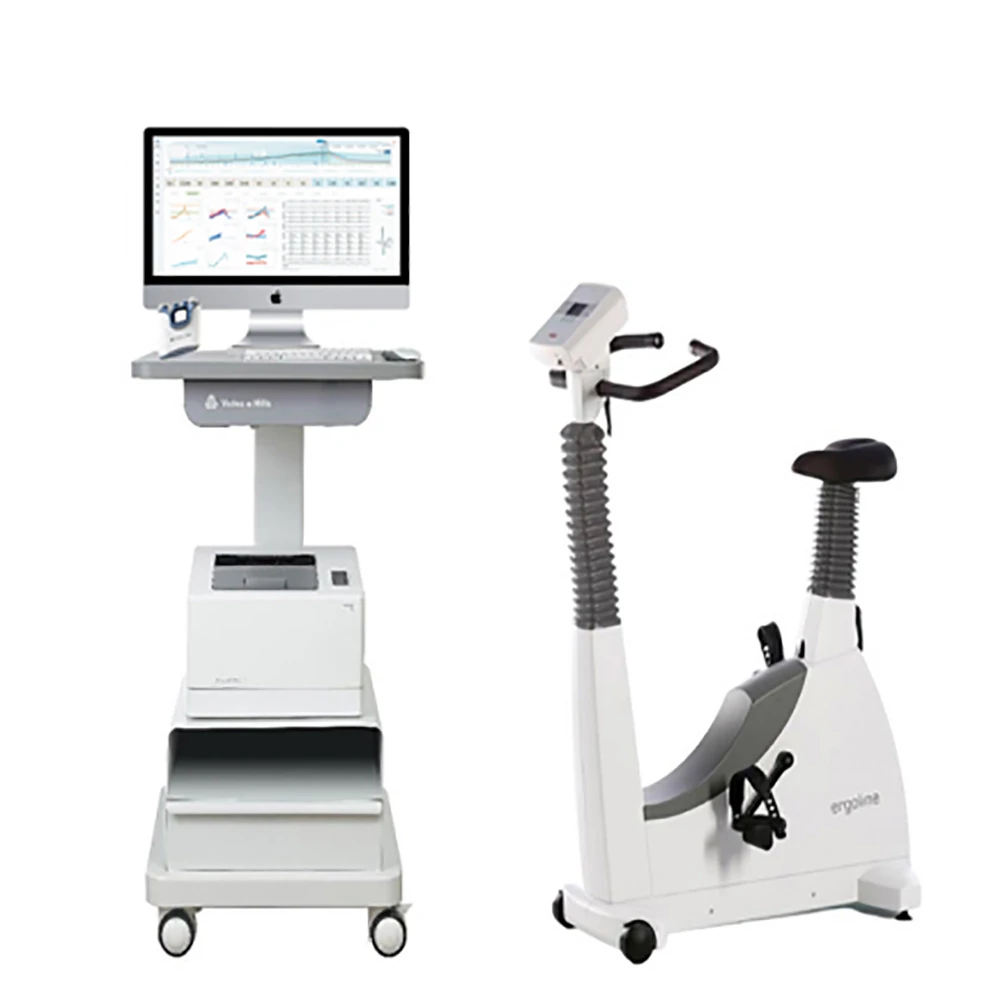
iMac-Based Design with macOS Platform and Bluetooth Connectivity
The V&H All-in-One CPET System is the first CPET system running on Apple macOS and adopts an iMac-based All-in-One design concept.
Its Bluetooth connection provides additional flexibility for system operation.
The innovative software display uses a distinctive single-frame design to integrate different information views, creating a modern testing experience.
Integrated ECG, Gas Exchange and Respiratory Monitoring
The system integrates multiple testing functions, including:
- ECG
- O₂/CO₂ analysis
- SpO₂ monitoring
- Stress BP measurement
By combining these functions into one platform, the system provides a comprehensive solution for cardiopulmonary exercise testing.
Portable Design for Hospitals, Rehabilitation Centers and Laboratories
The All-in-One structure allows the system to be used in various environments.
Potential application scenarios include:
- Clinical settings
- Rehabilitation centers
- Laboratories
- Wards
- Sports applications
- Home environments
This flexible design expands the possibilities for CPET testing beyond traditional laboratory spaces.
Intelligent Software with Comprehensive CPET Analysis Functions
The V&H CPET software integrates multiple analysis functions to support professional testing workflows.
The system includes functions such as:
- ERGO-ER
- WASSERMAN-9
- AT
- INTRABREATH
- QT CALE
- RESP-DIVER
- CALORIMETRY
- WORK-LOAD
- DATA-LIST
These integrated functions support different stages of CPET data review and analysis.
Frequently Asked Questions About CPET Testing
What Does a CPET Test Measure?
A CPET test measures physiological responses during exercise, including oxygen consumption, carbon dioxide production, cardiovascular response, and exercise workload changes.
How Long Does a Cardiopulmonary Exercise Test Take?
The testing duration depends on the selected exercise protocol and patient situation. A complete process generally includes preparation, exercise testing, and recovery monitoring.
What Is the Difference Between CPET and Spirometry Test?
A spirometry test mainly evaluates respiratory function through breathing measurements, while CPET evaluates the combined response of the cardiovascular and respiratory systems during exercise.
Conclusion
Cardiopulmonary Exercise Testing (CPET) provides a detailed approach to understanding how the cardiovascular and respiratory systems respond during exercise. With data from gas exchange analysis, respiratory assessment, and exercise monitoring, CPET is applied in clinical testing, rehabilitation, research, and sports medicine.
For healthcare facilities looking for an integrated CPET solution, V&H All-in-One CPET System combines advanced analysis functions with an innovative portable design to support different testing environments. Contact V&H today to learn more about our CPET system and explore a suitable solution for your application.
Post time: August 7, 2026


