


Setting up a cardiopulmonary exercise testing (CPET) lab requires more than a treadmill and a monitoring device. A complete testing setup needs equipment to measure respiratory function, monitor cardiac activity, analyze gas exchange, and record physiological changes during exercise.
For hospitals, cardiac rehabilitation centers, diagnostic laboratories, and medical equipment distributors, understanding these equipment requirements is an important step in planning a suitable CPET facility. The equipment configuration should support the intended testing procedures, provide reliable monitoring, and allow clinical staff to manage test data efficiently.
This guide explains the main equipment used in a CPET lab, its role in the testing process, and the factors healthcare buyers should consider when selecting a testing system.
1. What Are the Main Components of a CPET Lab?
A cardiopulmonary exercise testing lab needs several types of equipment that work together throughout the testing process. Each component has a specific role in collecting respiratory, cardiovascular, and exercise-related data.
The main equipment categories include:
- Pulmonary function testing equipment
- Gas exchange analysis equipment
- ECG monitoring equipment
- Exercise equipment, such as a treadmill or bicycle ergometer
- Blood oxygen and blood pressure monitoring devices
- CPET software for data recording and analysis
The exact configuration depends on the testing requirements of the facility. A laboratory conducting comprehensive exercise assessments may need a more integrated setup than one performing basic pulmonary function tests.
2. Pulmonary Function Testing Equipment
Pulmonary function testing is an important part of CPET. It helps assess respiratory function before the exercise phase begins.
A spirometer is commonly used to measure airflow and lung volumes through supervised breathing maneuvers. These measurements provide baseline respiratory information for comparison with exercise-related data.
Common pulmonary function measurements include:
- FVC (Forced Vital Capacity): The volume of air a person can forcibly exhale after taking a full breath.
- FEV1 (Forced Expiratory Volume in One Second): The volume of air exhaled during the first second of a forced expiration.
- SVC (Slow Vital Capacity): The volume of air exhaled slowly after a full inspiration.
- MVV (Maximum Voluntary Ventilation): The maximum volume of air a person can breathe in and out over a specified period.
When planning a CPET facility, buyers should consider the pulmonary testing functions required by their clinical workflows.
DIGITAL SPIROMETRY equipment can support the collection and recording of pulmonary function measurements. Its compatibility with the overall testing workflow is also worth considering when selecting equipment for a new laboratory.
3. Gas Analysis Equipment for Oxygen and Carbon Dioxide Measurement
Gas exchange analysis is one of the central parts of cardiopulmonary exercise testing. It measures how the body takes in oxygen and produces carbon dioxide during exercise.
A Metabolic Cart / Gas Analyzer is used in CPET setups to analyze respiratory gases. During testing, the patient exercises on a treadmill or bicycle ergometer while wearing a sealed face mask. The system collects respiratory gas data for continuous analysis.
Two important measurements are:
- VO2 (Oxygen Consumption): The amount of oxygen consumed by the body during exercise.
- VCO2 (Carbon Dioxide Production): The amount of carbon dioxide produced during metabolism.
These measurements help clinicians assess the body’s response to increasing exercise intensity.
Other parameters, such as the respiratory exchange ratio (RER), can provide additional information about metabolic responses during exercise.
When purchasing gas analysis equipment, healthcare facilities should evaluate its measurement functions, compatibility with other testing components, and suitability for their intended CPET procedures.
4. ECG Monitoring Equipment
Cardiac monitoring is another essential part of CPET. As exercise intensity increases, the heart’s electrical activity needs to be monitored throughout the test.
An ECG system records the electrical signals generated by the heart. This allows clinical staff to observe heart rate and ECG changes during exercise and recovery.
A Wireless Ecg Machine can offer a wireless connection between monitoring components and the associated computer system, depending on its design and configuration.
When evaluating ECG equipment for a CPET lab, buyers should consider:
- ECG monitoring capabilities during exercise
- Compatibility with the CPET system
- Data transmission and recording methods
- Display and review of ECG waveforms
- Suitability for the intended testing environment
The ECG component should work as part of the overall testing setup rather than being considered an isolated device. Integration can help clinical staff review cardiac and respiratory information within the same testing workflow.
5. Exercise Equipment: Treadmills and Bicycle Ergonometers
CPET requires physical activity so that clinicians can observe how the cardiovascular and respiratory systems respond to increasing workloads.
Two common exercise options are treadmills and bicycle ergometers.
Treadmills
Treadmills allow patients to walk or run at controlled speeds and inclines. They are used when the testing protocol involves weight-bearing exercise.
Bicycle Ergonometers
Bicycle ergometers allow exercise intensity to be adjusted through changes in resistance or workload. They provide another option for conducting incremental exercise tests.
The choice depends on the testing protocol, patient population, available laboratory space, and equipment compatibility.
Before purchasing exercise equipment, facilities should confirm that the selected treadmill or bicycle ergometer can work with the intended CPET setup.
6. SpO2 and Blood Pressure Monitoring Devices
In addition to respiratory gas analysis and ECG monitoring, CPET involves monitoring other physiological parameters.
A finger-clip pulse oximeter is used to measure peripheral oxygen saturation (SpO2). It can monitor oxygen saturation throughout exercise and during the recovery period.
Blood pressure monitoring is also relevant to exercise testing. Stress blood pressure measurements provide additional information about cardiovascular responses to physical activity.
When planning a laboratory, buyers should check which monitoring functions are integrated into the selected system and which require separate equipment.
This distinction helps avoid unnecessary purchases and makes it easier to plan the complete equipment configuration.
7. CPET Software and Data Analysis
Hardware collects physiological signals and measurements, but software is needed to display, record, and analyze the test data.
CPET software brings different measurements together to support the testing workflow. Depending on the system, software functions may include:
- Real-time display of testing information
- ECG waveform presentation
- Respiratory gas data analysis
- Exercise workload monitoring
- Data recording and review
- Test report generation and interpretation support
CPET INTERPRETATION is an important consideration when evaluating software. Clinicians need access to organized test data and relevant graphical presentations to review exercise responses.
One commonly used graphical format is the Wasserman plot, also known as the Nine-Panel Plot. It presents multiple CPET variables in a structured format for clinical review.
For healthcare buyers, software compatibility, data presentation, and available analysis functions should be considered alongside the hardware configuration.
8. Introducing V&H’s iMac-Based CPET System
After identifying the main equipment requirements, healthcare facilities can evaluate integrated systems that combine multiple monitoring and testing functions.
V&H offers a new-design Cardiopulmonary Exercise Test (CPET) system based on Apple macOS, featuring Bluetooth connectivity and an All-in-One timeline design.
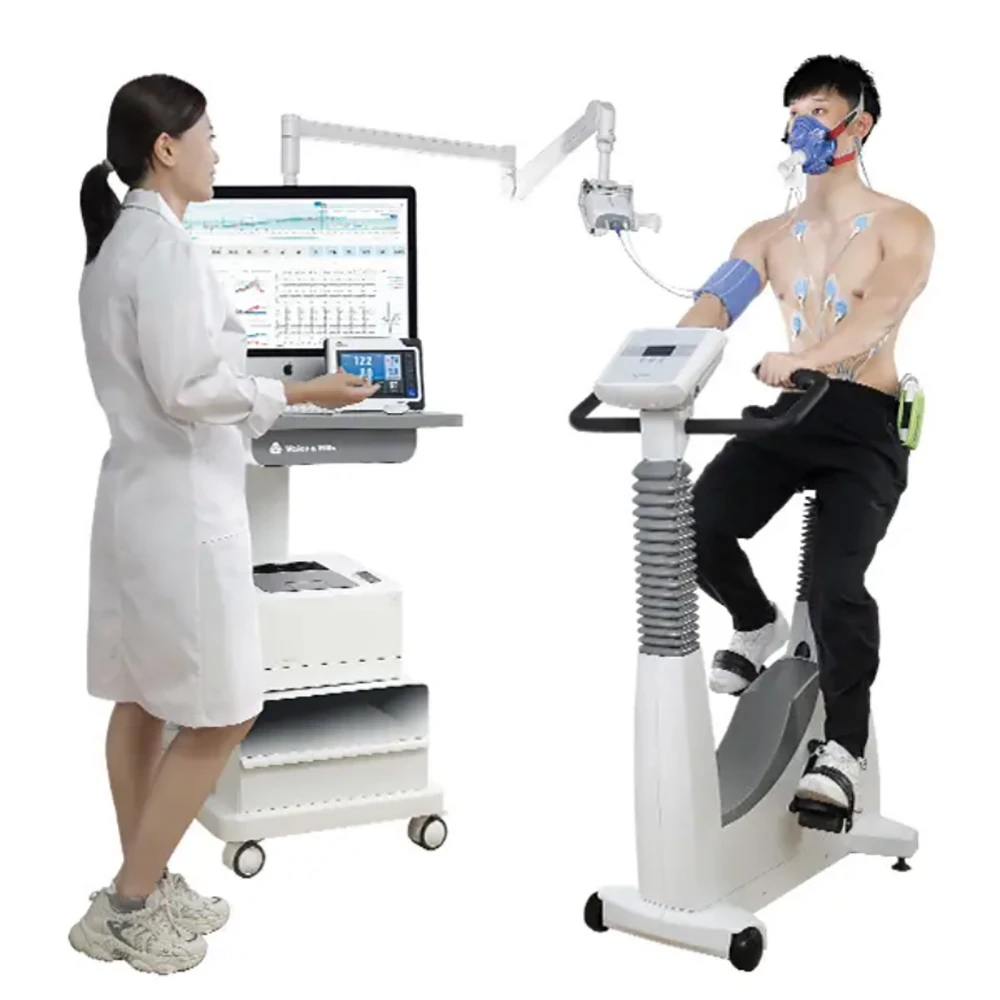
The system integrates several functions, including:
- ECG
- O2/CO2 monitoring
- SpO2 monitoring
- Stress blood pressure
Its software uses a timeline-style display to present past, present, and future information within a single interface. The ECG display also provides color visualization of ST-segment changes.
The system includes functions such as ERGO-ER, WASSERMAN-9, AT, INTRABREATH, QT CALE, RESP-DIVER, CALORIMETRY, WORK-LOAD, and DATA-LIST.
The CPET testing process described by V&H includes two main components:
Resting Pulmonary Function Testing
Patients perform supervised breathing maneuvers using a spirometer to assess baseline respiratory parameters.
Cardiopulmonary Exercise Testing
Patients exercise on a treadmill or bicycle ergometer while wearing a sealed face mask. The system performs continuous gas exchange analysis to measure oxygen consumption and carbon dioxide production. A finger-clip pulse oximeter monitors SpO2 during exercise and recovery.
The portable design supports different usage scenarios, including clinical, rehabilitation, laboratory, ward, sports, and home settings, both indoors and outdoors.
For hospitals, rehabilitation facilities, and medical equipment distributors, this system provides an integrated approach to cardiopulmonary exercise testing with multiple monitoring and analysis functions.
9. What Should Buyers Consider When Setting Up a CPET Lab?
Choosing equipment for a new CPET laboratory requires consideration of both clinical requirements and practical operating conditions.
Testing Requirements
First, identify the types of tests the facility plans to conduct. The required pulmonary function measurements, gas analysis capabilities, and cardiac monitoring functions will influence equipment selection.
Equipment Compatibility
Different components need to work together during testing. Buyers should confirm compatibility between the ECG system, gas analysis equipment, exercise equipment, and software.
Software Functions
Review the available data displays, graphical analysis tools, recording functions, and reporting capabilities. These features affect how clinical staff manage and review test results.
Laboratory Space and Portability
Consider the available testing space and whether the equipment needs to support different locations within the facility. A portable system may be useful for institutions with multiple testing environments.
Supplier Communication
Before placing an order, buyers should confirm the equipment configuration, included components, connection requirements, and technical support arrangements with the supplier.
These checks help healthcare facilities select a setup that matches their actual testing needs instead of purchasing equipment based only on individual specifications.
Conclusion
Setting up a CPET laboratory involves coordinating pulmonary function testing, gas exchange analysis, ECG monitoring, exercise equipment, and software. Each component contributes to the collection and review of cardiopulmonary data during exercise.
For hospitals, diagnostic centers, rehabilitation facilities, and medical equipment distributors, understanding these requirements makes it easier to plan an appropriate testing setup.
V&H’s iMac-based CPET system integrates ECG, O2/CO2, SpO2, and stress blood pressure functions with Bluetooth connectivity and dedicated CPET software. Contact our team to learn more about the system and discuss its configuration for your medical testing requirements.
FAQs
1. What equipment is needed for a CPET lab?
A CPET lab typically requires pulmonary function testing equipment, gas analysis equipment, ECG monitoring, a treadmill or bicycle ergometer, SpO2 and blood pressure monitoring devices, and CPET software.
2. What does a CPET system measure?
A CPET system monitors cardiovascular and respiratory responses during exercise, including ECG activity, oxygen consumption, carbon dioxide production, SpO2, and exercise-related blood pressure.
3. What functions does V&H’s iMac-based CPET system integrate?
V&H’s iMac-based CPET system parameters measured with VO₂, VCO₂, VE, RER, VO₂max / VO₂peak, anaerobic threshold (AT), ventilatory equivalents (VE/VCO₂), oxygen pulse, also together with continuous 12-lead ECG, heart rate, SpO₂ and blood-pressure trends so on. The software produces an automatic report including the exercise prescription.
Post time: November 6, 2026


