


Electrocardiography (ECG) is an important part of cardiac assessment in healthcare settings. As digital technologies become more widely used in medical equipment, PC-based ECG systems provide another way for healthcare professionals to record, review, and analyze cardiac electrical activity. By connecting an ECG acquisition device to a computer, these systems combine signal recording with software-based measurement and analysis.
For hospitals, clinics, and medical equipment distributors, understanding how a PC Based ECG Machine works can help clarify its role in clinical workflows. Device configuration, software functions, data handling, and compatibility with the intended working environment are all relevant when evaluating this type of equipment.
What Is a PC-Based ECG Machine?
A PC-based ECG machine is an electrocardiography system that uses a computer to support ECG data processing and review. Instead of relying entirely on a standalone display and operating interface, the system connects an ECG acquisition device to a computer, where dedicated software can present recorded signals and provide measurement or analysis functions.
A Computerized ECG Machine can help organize ECG recording and analysis within a computer-based workflow. Different PC-based ECG machines offer different functions. Depending on the model, these may include multi-lead ECG recording, automatic measurements, and computer-assisted ECG analysis.
Applications of PC-Based ECG Systems
PC-based ECG systems can support cardiac assessment in healthcare environments where ECG recording and computer-based analysis are required. Their practical applications depend on the device’s capabilities and the clinical purpose of the examination.
ECG Recording and Cardiac Assessment
ECG recording captures the electrical activity of the heart and provides information that qualified healthcare professionals can use during cardiac assessment. A 12-lead ECG records cardiac electrical activity from multiple perspectives, helping clinicians evaluate the recorded waveforms.
When evaluating a 12 Channel ECG Machine Specifications list, users should distinguish between the number of recording channels and the number of ECG leads. These terms describe related but different aspects of an ECG system, so the manufacturer’s documentation should be checked to understand the device’s actual recording configuration.
Computer-Based ECG Review
Connecting an ECG device to a computer allows recorded data to be viewed through compatible software. Depending on the system, the software may provide waveform displays, measurement parameters, and analysis tools.
For healthcare professionals, the value of this arrangement lies in having ECG recording and software-based review within the same workflow.
Clinical Workflow Support
In clinical settings, ECG equipment needs to fit existing examination procedures. A PC-based system may be suitable when a computer is already part of the recording and review process.
Before selecting a device, healthcare facilities should consider where the ECG will be recorded, which computer environment will be used, and how staff will access the relevant software. These practical factors help determine whether the system fits the facility’s workflow.
The Role of Software in ECG Analysis
Software is a central part of a PC-based ECG system. It provides the interface through which users can view recorded signals and access the measurement or analysis functions supported by the device.
Automatic ECG Analysis
An Automatic ECG Machine may include software that performs ECG measurements or provides automated analysis. These functions can help organize information for clinical review, but their availability and scope vary by product.
Automatic analysis should not be treated as a substitute for professional interpretation. Healthcare professionals must assess the results in the context of the patient’s condition and the purpose of the examination.
ECG Reporting and Data Review
An ECG Machine With Reporting may provide functions for presenting examination results in a report format. However, reporting capabilities are not identical across all ECG systems. Some may focus on waveform display and measurement, while others may offer additional reporting options.
When evaluating a PC-based ECG system, users should confirm whether the software supports the required report format, data storage method, and review process. These details are particularly relevant for facilities that need to incorporate ECG records into their existing procedures.
Data Management in PC-Based ECG Systems
Data management is an important consideration when ECG equipment is used regularly. Recording a waveform is only one part of the process; healthcare providers may also need to review examination results and handle records according to their internal procedures.
The available data management functions depend on the equipment and software. Buyers should verify how ECG records are stored, whether examinations can be retrieved for review, and which export options are supported. They should also check computer compatibility and follow appropriate procedures for protecting patient information.
A PC connection alone does not guarantee network integration, cloud storage, electronic health record compatibility, or automatic data backup. These capabilities should be confirmed separately if they are required for a particular project.
Introducing the CV200 12-Channel PC-Based ECG
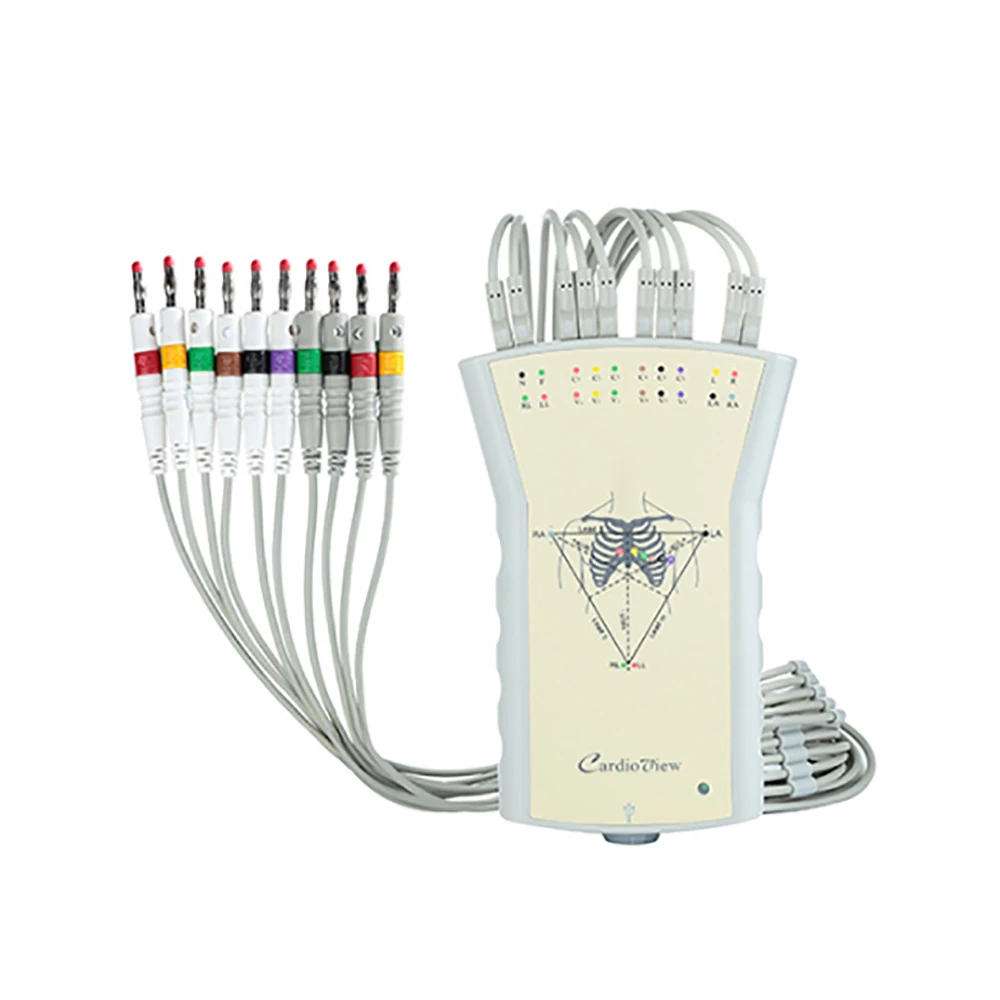
The CV200, developed by Vales & Hills Biomedical Tech. Ltd., is a portable 12-channel PC-based ECG device designed to record and measure ECG, VCG, and VLP signals. When used with the CardioView program installed on a Windows PC, it provides measurement parameters for analysis and diagnosis.
The CV200 connects to a Windows computer through USB, allowing recorded ECG data to be reviewed using the accompanying software. Its PC-based design combines the ECG acquisition device with computer-based analysis functions, making it an option for healthcare professionals evaluating this type of system.
The device also includes an automatic diagnosis feature. As with other computer-assisted ECG analysis functions, the results should be reviewed by qualified healthcare professionals and interpreted within the appropriate clinical context.
USB Connectivity and Portable Design
The CV200 uses a USB connection to link the ECG device with a Windows PC. Its portable design may be useful in settings where a compact ECG acquisition device is preferred. The product is battery-free, so buyers should confirm the required computer and USB operating conditions before integrating it into their intended workflow.
Anti-Defibrillation Support
The CV200 features a built-in defibrillation resistor. This design supports use in environments involving defibrillators, electric knives, and other equipment that may generate electromagnetic interference.
This feature is relevant when reviewing ECG equipment for clinical environments where electrical interference is a consideration.
What to Consider When Evaluating a PC-Based ECG Machine
When comparing PC-based ECG equipment, healthcare providers and medical equipment distributors can focus on several practical areas:
- Recording configuration: Check the supported channels and leads, along with the manufacturer’s stated recording capabilities.
- Software functions: Confirm which measurement, analysis, and reporting features are included.
- Computer compatibility: Review operating system requirements and connection methods.
- Data handling: Verify how examinations are stored, retrieved, and exported, where applicable.
- Clinical environment: Check the device’s stated protection features and operating requirements.
- Technical documentation: Review product specifications, user instructions, and relevant conformity documentation before purchasing.
These checks help buyers assess whether a device’s documented capabilities match their intended use without relying on assumptions based on its product category.
Conclusion
A PC-based ECG machine combines ECG recording hardware with computer software for viewing and analyzing cardiac electrical signals. Its suitability for a healthcare facility depends on the recording configuration, supported software functions, data handling options, and intended working environment.
The CV200 from Vales & Hills Biomedical Tech. Ltd. is a portable 12-channel PC-based ECG device that connects to a Windows PC through USB and works with the CardioView program. It supports ECG, VCG, and VLP measurement and recording, with automatic diagnosis and a built-in defibrillation resistor among its documented features.
Contact Vales & Hills Biomedical Tech. Ltd. to learn more about the CV200 PC-based ECG machine and its available features for your clinical or distribution needs.
Post time: October 16, 2026


