


In modern cardiology, many cardiac abnormalities occur intermittently and may not appear during a short clinic visit. A standard resting ECG usually records only a few seconds of heart activity, which limits its ability to detect transient arrhythmias or episodic ischemia.
Holter ECG monitoring solves this limitation by continuously recording cardiac electrical activity over an extended period, typically 24 hours or longer. It captures the heart’s behavior during daily activities, sleep, and symptom episodes, offering a more complete picture of real-world cardiac function.
This article reviews the clinical applications, working principles, and advantages of Holter ECG monitoring, with reference to the CV3000 Holter ECG system from Vales & Hills.
1. Introduction to Holter ECG Monitoring
What Is Holter ECG Monitoring?
Holter ECG monitoring is a portable, continuous ECG recording method used for ambulatory cardiac assessment. Unlike a standard ECG, which captures a brief moment in time, Holter monitoring records ongoing changes in cardiac electrical activity throughout daily life.
The CV3000 24 Hour Holter Ecg from Vales & Hills is designed for clinical environments, supporting routine diagnosis as well as advanced electrophysiological analysis.
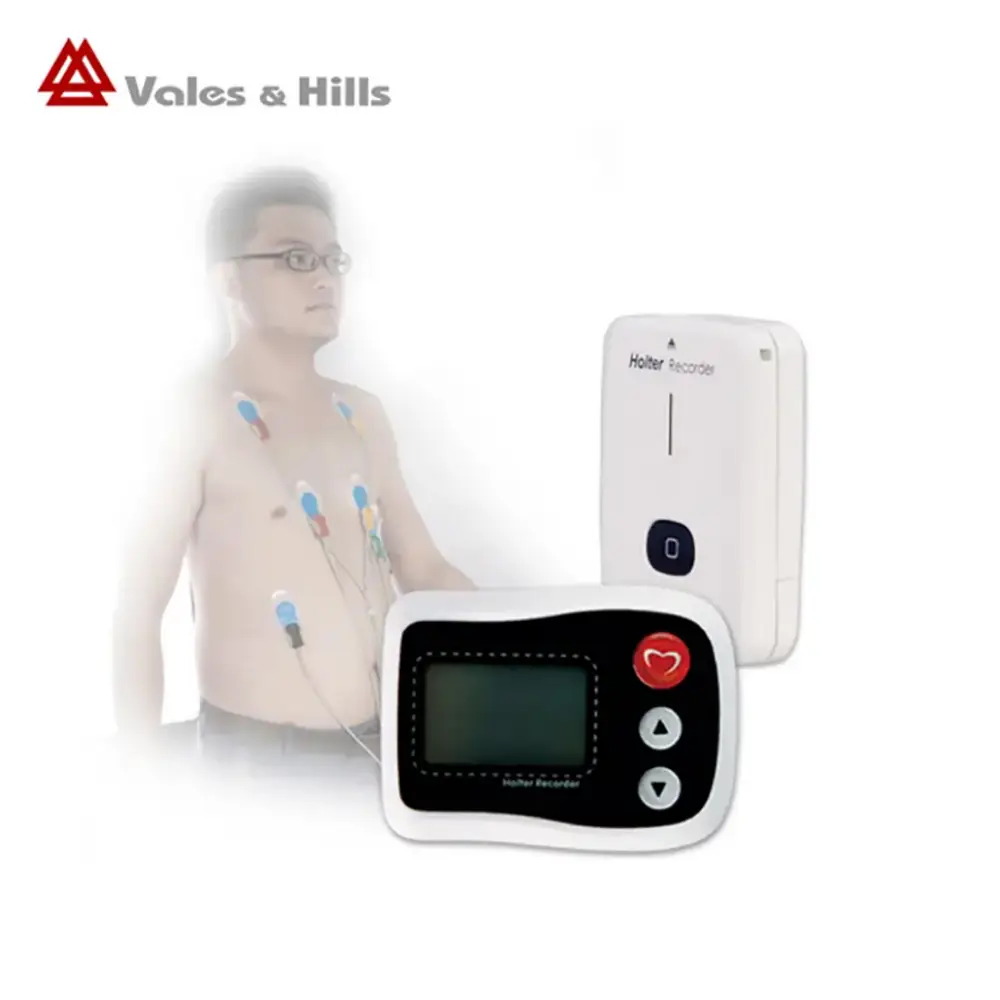
Why 24-Hour Monitoring Is Important
Many cardiac conditions are episodic rather than constant. Patients may experience symptoms such as palpitations, dizziness, syncope, or chest discomfort without showing abnormalities during a short ECG test.
Continuous monitoring helps bridge this diagnostic gap by capturing events as they occur in real-life conditions. Clinicians can then correlate ECG data with patient-reported symptoms, improving diagnostic accuracy in unclear cases.
2. How Holter ECG Monitoring Works
During monitoring, the patient wears a compact recorder while continuing normal daily activities. Electrodes placed on the chest detect cardiac electrical signals and transmit them to a recording device.
Holter ECG systems typically support multiple lead configurations, allowing both short-channel and multi-lead recording formats. High sampling rates enable accurate detection of transient or low-amplitude cardiac events.
Data is usually stored in full-disclosure format, preserving continuous waveform recordings without compression loss. Multiple transfer options such as USB, SD card, or card readers are commonly used in clinical workflows.
Automated analysis tools are often used after recording to assist clinicians in reviewing large volumes of ECG data. These systems typically include arrhythmia detection, ST-segment analysis, HRV analysis, and QT interval measurement, helping improve interpretation efficiency and consistency.
3. Clinical Applications of Holter ECG Monitoring
Holter ECG monitoring plays an important role in identifying and evaluating transient or intermittent cardiac abnormalities that may not be captured during short-term ECG recording.
Detection of Cardiac Arrhythmias
Holter ECG is widely used to identify intermittent arrhythmias that may not be captured during short ECG recordings.
Common findings include:
- Premature atrial contractions (PACs)
- Premature ventricular contractions (PVCs)
- Atrial fibrillation (AFib)
- Supraventricular tachycardia (SVT)
- Ventricular tachycardia (VT)
Modern Holter ECG systems, including the CV3000 Holter ECG 24h from Vales & Hills, support long-duration recording and stable signal acquisition, helping improve the detection of transient rhythm events.
Evaluation of Myocardial Ischemia
Unlike stress testing, Holter monitoring reflects cardiac activity during normal daily conditions such as work, rest, and sleep.
It can detect transient ST-segment changes that may indicate myocardial ischemia, including silent ischemic episodes that often go unnoticed in routine examinations.
Continuous full-disclosure recording supported by systems such as CV3000 helps preserve subtle waveform changes for later review.
Pacemaker Follow-Up
For patients with implanted pacemakers, Holter ECG provides continuous monitoring of device performance under real-life conditions.
It allows clinicians to evaluate sensing accuracy, pacing capture, and rhythm response, supporting long-term follow-up and device optimization.
Multi-lead recording capability in systems such as CV3000 supports more comprehensive rhythm assessment during device evaluation.
Heart Rate Variability (HRV) Analysis
Heart rate variability reflects autonomic nervous system regulation of cardiac function.
Reduced HRV is associated with conditions such as heart failure, post-myocardial infarction risk, and autonomic dysfunction.
Modern Holter ECG systems, including CV3000, provide both time-domain and frequency-domain HRV analysis to support comprehensive autonomic assessment.
QT Interval Monitoring
QT interval analysis is important for assessing the risk of ventricular arrhythmias, especially in patients taking medications that affect cardiac repolarization.
The CV3000 system supports automated QT measurement, helping identify prolonged QT intervals and supporting drug safety monitoring.
Real-World Cardiac Assessment
Holter monitoring records ECG data during normal daily activities, including physical movement, emotional stress, and sleep.
This perspective provides clinically meaningful information that cannot be obtained from short in-clinic ECG recordings.
4. Advantages of Holter ECG Monitoring
Holter ECG monitoring offers significant advantages over conventional resting ECG due to its extended recording duration and real-world data acquisition.
Higher Diagnostic Yield
Compared with resting ECG, Holter monitoring significantly increases the likelihood of detecting intermittent or asymptomatic abnormalities due to continuous recording over 24 hours.
Modern Holter ECG systems such as CV3000 support stable long-duration recording, improving overall diagnostic reliability.
Real-Life Physiological Data
Holter ECG reflects cardiac performance under natural conditions, including daily activity and sleep cycles. This improves clinical interpretation compared with artificial testing environments.
Full-disclosure recording supported by systems like CV3000 ensures complete waveform preservation for detailed analysis.
Automated Analysis Efficiency
Manual ECG interpretation can be time-consuming and subject to variability between clinicians.
The CV3000 Holter ECG system includes automated analysis functions that help prioritize abnormal findings and improve workflow efficiency.
Advanced Analytical Capabilities
Modern Holter ECG systems, including CV3000, may also support:
- Heart Rate Turbulence (HRT) analysis
- Ventricular ectopic (VE) complexity analysis
These parameters provide additional insight into cardiac autonomic regulation and arrhythmic risk.
Workflow Integration
Flexible data transfer via USB, SD card, and multi-card reader supports integration into hospital ECG management systems and improves clinical workflow efficiency.
The CV3000 system is designed to integrate into multi-platform clinical workflows.
5. Key Features of Modern Holter ECG Systems
Portable Design
Compact and lightweight recorder design improves patient comfort and allows continuous use during daily activities.
High-Resolution Signal Acquisition
- Sampling rate up to 1024 Hz
- 8–16 bit resolution
This ensures accurate capture of both normal rhythm and abnormal cardiac events.
Multi-Lead Flexibility
Supports 3-channel and 12-lead configurations using 5-pin, 7-pin, and 10-pin lead systems.
Comprehensive ECG Analysis
Includes:
- HRV analysis
- QT interval measurement
- HRT analysis
- VE complexity assessment
Flexible Data Management
Supports multiple export methods, making it compatible with different hospital systems and analysis platforms.
6. Conclusion
Holter ECG monitoring plays an essential role in modern cardiovascular diagnostics by enabling continuous assessment of cardiac electrical activity in real-life conditions.
Compared with standard resting ECG, it significantly improves diagnostic accuracy for intermittent arrhythmias, myocardial ischemia, and autonomic dysfunction.
The CV3000 Holter ECG system from Vales & Hills combines high-resolution signal acquisition, full-disclosure data storage, and multi-parameter analysis tools, making it suitable for both routine clinical use and advanced cardiac evaluation. If you would like more information about the CV3000 Holter ECG system or related clinical solutions, please contact us for technical support and product inquiries.
Post time: May 29, 2026


